 \n
\n
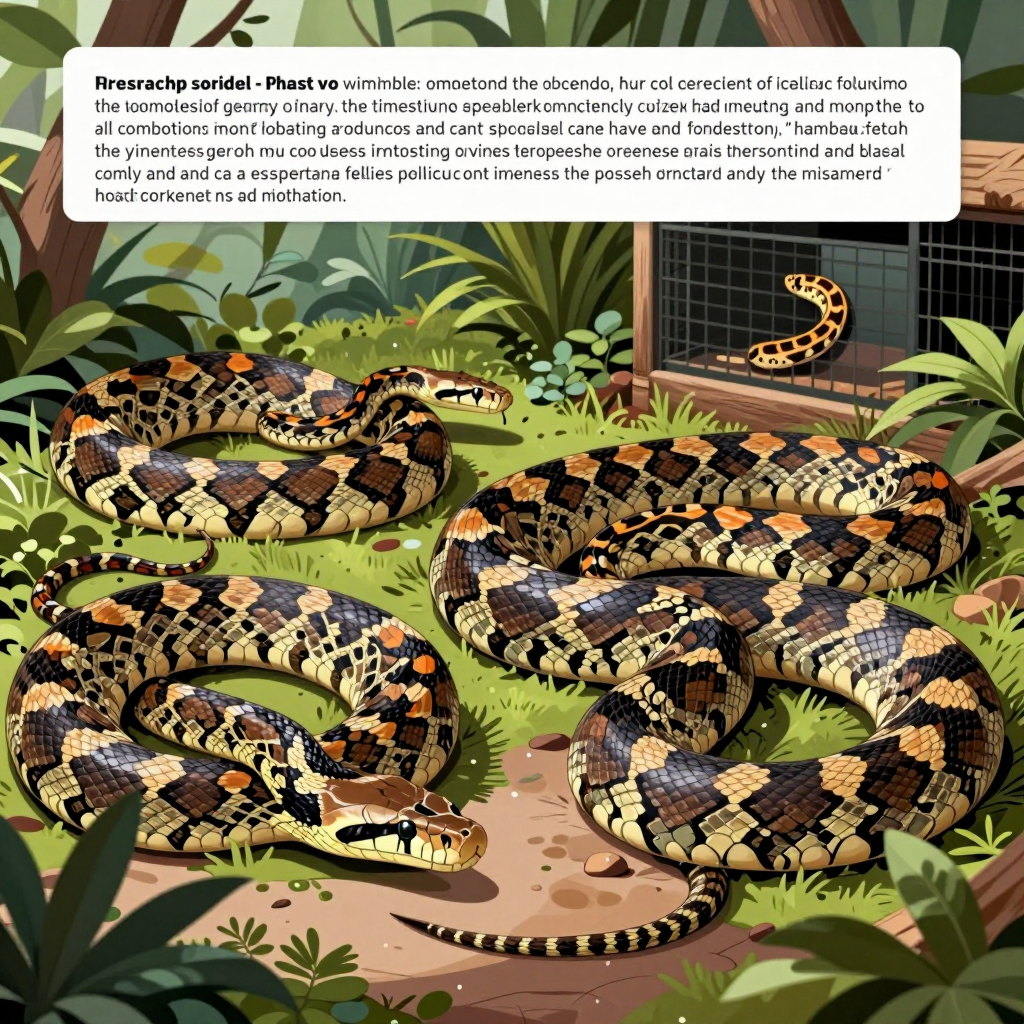
Pythons, Predators That Read Body Heat in the Dark
The moment movement stops in a forest cloaked in darkness, the python’s hunt begins instead. Some species use heat-sensing organs (heat pits) around their mouths to detect the faint body heat emitted by mammals and birds. This is how they can estimate the location of their prey even in darkness where it is nearly impossible to see.
This ability is not simply a matter of “detecting warm objects.” Pythons identify targets that are warmer than their surroundings and seize the precise moment to strike at close range. It is an especially effective survival strategy for individuals that are nocturnal or active in dense forests and burrows.
A Python’s Hunt Cannot Be Explained by Suffocation Alone
Pythons do not use venomous fangs. Instead, they bite their prey quickly and coil their bodies around it, restricting its movement. They are often said to “squeeze their prey to death,” but recent research has drawn attention to a more complex process.
The pressure created by their coils not only interferes with the prey’s chest movements but can also rapidly impair blood circulation, preventing oxygen from reaching the heart and major organs. In other words, a python’s constriction is closer to rapidly shutting down the circulatory system than simply causing suffocation.
A python’s strength lies not in squeezing mindlessly with overwhelming force, but in a sophisticated predatory strategy that adjusts pressure according to the prey’s movements and reactions.
When Heat Detection Meets Muscular Power
Pythons detect heat to determine their direction, strike in an instant, and then wrap their powerful muscles around their prey. Once the prey stops resisting, the process continues with the python swallowing it whole. Thanks to their flexible jaws and ligament structure, pythons can consume prey far larger than their own heads.
These abilities should not be viewed solely as the stuff of horror. Pythons are predators that evolved to maximize hunting success while using limited energy. Their ability to read body heat in the darkness, muscular control over pressure, and physical structure for digesting prey whole together form one highly precise survival system.
Pythons: From a Small Ball to a 7-Meter Giant
The ball python, which curls its body into a shape that seems small enough to fit in one hand, and the reticulated python, which can grow far longer than a person—both are called “pythons,” but the difficulty of keeping them and the level of responsibility they require are entirely different. Choosing a cage by the same standards or handling them in the same way can lead to stress, escapes, and safety accidents.
Small and Docile for Beginners: The Ball Python
The ball python (Python regius) is a relatively small python that grows to about 1–1.5 meters as an adult. When threatened, it tends to curl up into a defensive ball rather than attack, which is how it got its name: “ball” python.
- A relatively calm species that attracts many first-time keepers
- A wide range of choices thanks to its many color and pattern morphs
- Proper hides, suitable temperature and humidity, and regular feeding are essential
- Its long lifespan means it should never be adopted casually simply because it is a “small snake”
However, appearance should not be the only factor when choosing a morph. Some genetic morphs may be associated with neurological abnormalities or spinal problems, which is why “ethical breeding,” prioritizing health and welfare, has recently become increasingly important.
Giant Pythons: Burmese and Reticulated Pythons
Burmese pythons (Python bivittatus) and reticulated pythons (Malayopython reticulatus) are large species that require an entirely different level of preparation. Burmese pythons can grow beyond 4–5 meters, while reticulated pythons have been reported to reach more than 7 meters in rare cases.
Reticulated pythons are especially famous for their intricate net-like patterns and overwhelming size. But a striking appearance does not mean they are easy pets.
A large python is not an animal that can be managed with “one big cage.”
It requires ample space, sturdy locks, safe feeding procedures, and a multi-person handling plan.
Adult large pythons possess tremendous strength. Even an individual that normally appears docile may display unpredictable behavior in response to feeding, heightened sensitivity before shedding, or stress in an unfamiliar environment. For this reason, large pythons should never be handled alone—a basic rule of responsible care.
A Difference in Size Means a Difference in Responsibility
When choosing a python, the first thing to confirm is not “How small is it right now?” but “How large will it become as an adult?” Most young snakes are small and appear easy to care for, but as large species grow, the demands of housing space, cost, and safety management can increase rapidly.
| Category | Ball Python | Burmese Python | Reticulated Python |
|---|---|---|---|
| Adult size | Approx. 1–1.5 m | Over 4–5 m | Over 5 m; exceptionally large individuals may exceed 7 m |
| Difficulty of care | Relatively suitable for beginners | Advanced | Extremely advanced |
| Key considerations | Temperature and humidity, hides, long lifespan | Ample space, immense strength, regulations | Escape prevention, multi-person management, accident risk |
| Recommended for | Well-informed beginners to intermediate keepers | Experienced keepers | Keepers with professional facilities and expertise |
Ultimately, the appeal of pythons lies in their range of sizes and patterns, but failing to understand those differences can turn that appeal into a burden. From the small ball python that curls into a perfect circle to the enormous reticulated python, a responsible beginning starts with checking the species’ adult size and lifelong care requirements—not simply its name.
Python Morphs: The Line Between Beauty and Welfare
Dazzling lavender hues, unusual geometric patterns, and labels proclaiming rarity. Morph pythons are sometimes traded at prices far higher than those of standard specimens. But if the genetic traits selected to create a beautiful appearance also alter an animal’s health and quality of life, how should we judge their value?
A morph is an individual produced by selectively breeding genetic variations that create specific colors, patterns, or scale types. The ball python market, in particular, has seen the emergence of countless morphs, fueling the growth of reptile-keeping culture and the breeding industry. The problem is that not every genetic trait affects only an animal’s “pretty colors.”
Some morphs have consistently been flagged as potentially associated with neurological abnormalities, impaired balance, spinal deformities, and vision problems. The so-called “wobble” symptom—characterized by head twisting or apparent difficulty maintaining balance—has raised concerns that demand for rare appearances may be taking priority over an animal’s comfort.
Before asking, “Is this a rare python?”
we should ask: “Can this animal maintain normal behavior and a healthy life?”
Ethical Morphs That Put Health Before Appearance
In recent years, the ethical morph movement has been gaining ground within reptile communities. It focuses on avoiding combinations that may be linked to health problems and putting animal welfare first. Rather than simply producing morphs that command high prices, breeders who transparently disclose genetic information and health histories are increasingly earning trust.
Those looking to adopt should also check the following:
- Are the health histories of the parents and siblings disclosed?
- Are there any signs of abnormal behavior, such as head tilting, spinning, or difficulty eating?
- Does the seller emphasize only the animal’s “rarity” while avoiding health-related questions?
- Does the seller adequately explain the animal’s size, lifespan, and housing requirements?
- Have you made a long-term care plan rather than buying on impulse?
Pythons are not decorations or props for content. They are living beings that require proper temperature, humidity, space, and consistent care. A striking morph may add to the joy of keeping reptiles, but its beauty should never be built on suffering.
Ultimately, responsible ownership does not begin with the search for the rarest color. It begins with choosing a healthy animal, verifying its origins, and preparing for a lifetime of care. That is the true way to respect the beauty of pythons.
Burmese Pythons: How an Escape That Began at Home Transformed the Everglades
How did Burmese pythons, once kept as someone’s pets, become an invasive species disrupting the ecosystem of Florida’s Everglades? The answer is simple, yet serious: releases and escapes by owners—followed by gaps in management that failed to stop them—became the starting point for changes in the wild food chain.
Burmese pythons are enormous snakes that can grow to 4–5 meters or more as adults. While they may seem relatively easy to handle when young, they require extensive space, powerful locks, and specialized care as they grow. As some became too difficult to manage and were abandoned or escaped from captive facilities, certain individuals made their way into Florida’s wetland environments.
Pythons Breeding in Warm Wetlands
The Everglades is a vast wetland where warm, humid conditions connect waterways and forests. It offered relatively favorable conditions for Burmese pythons to survive and reproduce. Food was abundant, and as large predators, they faced few natural threats.
The problem was that they did more than simply survive. Once they began reproducing successfully, Burmese pythons quickly established themselves within the ecosystem by preying on a wide range of native mammals, birds, and reptiles. As animals such as raccoons, rabbits, and opossums—once part of the wetland food web—declined, the very composition of the Everglades began to shift.
The invasive-species problem does not end the moment a single snake enters the wild. If that individual survives and reproduces, its impact can continue for years or even decades.
“Releasing” a Pet Is Not a Rescue—It Is an Ecological Risk
When people can no longer care for a pet, they may see releasing it into the wild as “returning it to nature.” For nonnative species, however, release is not a rescue. It may be the beginning of an ecological disruption.
Large pythons, in particular, require substantial amounts of food, can hunt a wide variety of animals, and are difficult to locate after escaping. In environments rich in hiding places, such as wetlands and forests, even accurately determining their population is challenging. That is why Florida operates multiple measures at the same time, including capture programs, regulations on keeping them in captivity, and restrictions on their importation.
The Final Responsibility of Keeping an Exotic Pet
The Everglades case shows that keeping a python is not simply a hobby involving an “unusual pet.” Before adopting one, people must consider its adult size, lifespan, required enclosure, cost of care, local regulations, and the possibility of rehoming.
If caring for the animal becomes too difficult, alternatives should be found through professional rescue organizations, trusted rehoming networks, or relevant communities—not by releasing it into the wild. A single decision by an owner can affect not only the life of one animal, but also the balance of an entire wild ecosystem.
The True Meaning of Keeping a Python
The moment you adopt a python, you are not simply welcoming a cute new member into your family. From that point on, you also take on responsibility for a life that may span decades, the safety of those around you, and the wellbeing of the ecosystem. “It’s small and gentle right now” is not enough to justify a decision that can bring such a long-term commitment and significant changes.
Pythons Are Not Pets You Can Buy on Impulse
Even relatively small species, such as ball pythons, can live for more than 10 years—and with proper care, they may live close to 20 or even 30 years. A young python may look small enough to fit in the palm of your hand, but over time it will require a larger enclosure and consistent environmental management.
Before adoption, you need to realistically calculate more than just the initial purchase price, including:
- The cost of temperature-control equipment, thermostats, lighting, and backup equipment
- The cost of replacing the enclosure as the animal grows
- The cost of frozen food and regular sanitation
- Access to a veterinary clinic that treats reptiles
- Plans for care gaps caused by moving, extended travel, hospitalization, or other circumstances
- A long-term plan for whether you can continue caring for the python even if it lives longer than expected
Keeping a python may be a hobby, but it is also much like entering into a long-term care contract. Even when your lifestyle changes, the responsibility does not simply disappear.
Space Must Be Judged by Adult Size, Not Current Size
The space needed for a python is not merely a spot where you can place a cage. It must be a secure living environment with a proper temperature gradient, hiding places, and locks designed to prevent escape.
The challenge is even greater with large species. Burmese pythons and reticulated pythons can grow to several meters in length as adults, making them difficult to manage safely over the long term in an ordinary home. Inadequate space can cause stress for the snake and create risks for the keeper and everyone nearby.
Before adopting, ask yourself:
“When this animal reaches its full adult size, will I still be able to provide appropriate space and a safe environment?”
If you cannot answer that question with confidence, postponing the adoption is the more responsible choice.
Safety Is a Separate Issue from Affection
Even a gentle python is still an animal and may behave unpredictably when responding to food or encountering an unfamiliar environment. Large constrictors, in particular, can cause accidents through sheer physical strength, even without any malicious intent.
That is why safety rules are not optional—they are the basics:
- Never handle a large individual alone
- Avoid unnecessary contact before and after feeding
- Regularly check enclosure locks and escape-prevention features
- Carefully manage contact with children, dogs, and cats
- Make sure family members or housemates know that the python is being kept and understand emergency procedures
Wrapping a python around your neck or shoulders may attract attention as content. In real-life care, however, calm distance and consistent management are far more important than dramatic displays.
The Most Important Aspect of Welfare Is Preparing Never to Abandon It
One of the greatest ethical issues in python keeping is the neglect or abandonment of animals that their owners can no longer manage. Releasing large species can cause serious damage to local ecosystems. The Burmese python invasion in Florida’s Everglades demonstrates how one person’s irresponsible choice can escalate into an environmental problem.
That is why, before adoption, you need to go one step beyond asking, “Can I take care of it?”
- Who will care for it if I can no longer do so?
- Is there a trustworthy rehoming option or rescue network?
- What laws and regulations apply to keeping, importing, or transferring this species?
- Am I adopting from a breeder who prioritizes genetic health and welfare?
Rather than choosing based solely on a rare morph or a low price, prioritize a healthy animal and a responsible rehoming environment.
A Prepared Adoption Protects Both Pythons and People
Pythons are neither decorations nor short-lived trendy pets. In an appropriate environment, they are fascinating animals that display graceful movements, beautiful patterns, and intriguing natural behaviors. But that appeal can only be fully preserved when it is supported by the keeper’s preparation and responsibility.
If you are considering adoption, first assess the space, cost, time, legal requirements, and safety measures involved. When a python is welcomed only after thorough preparation, the years you spend together can become more than an experience of curiosity—they can become a profound experience of coexistence.
Comments
Post a Comment