 \n
Tottenham vs. Charlton: The Nightmare of 0–3, and the 5–1 Response
Tottenham’s 0–3 defeat to Brentford in their Premier League opener was an uncomfortable start. Both the performance and the result fell short of expectations, and the questions surrounding Roberto De Zerbi’s reign threatened to grow rapidly.
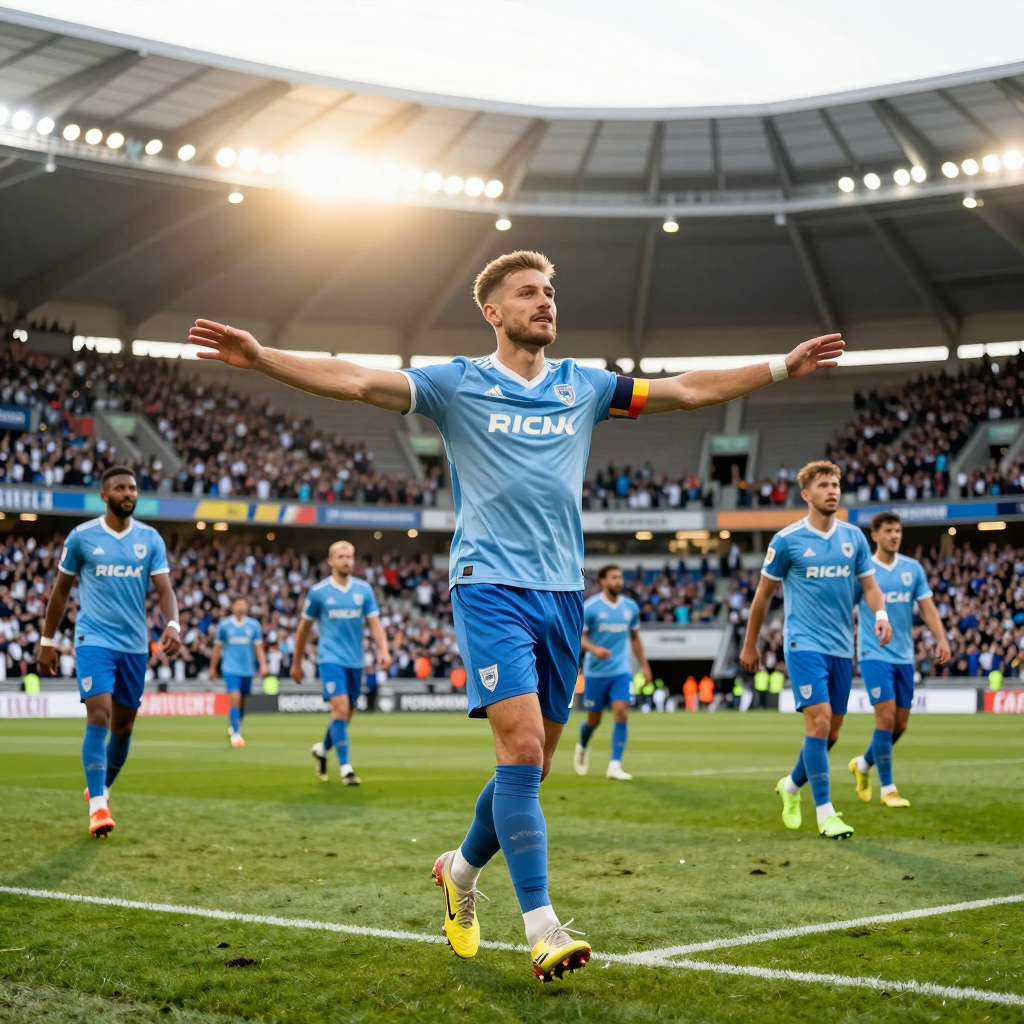
Yet just days later, the Tottenham vs. Charlton Carabao Cup second-round tie offered an entirely different spectacle. Tottenham demolished Charlton 5–1 at home, doing more than simply advancing to the next round—they instantly transformed the unsettled mood surrounding the opening weeks of the season.
The pattern of the match was just as clear as the scoreline. Tottenham controlled the game through sustained possession and gave their opponents virtually no room to counterattack. Beginning with Mickey Moore’s opener, Dominic Solanke, Kevin Danso, Savinho, and Ben Davies all found the net, with players from different areas of the pitch contributing to the scoring. This was not a victory dependent on a single match-winner; it was a win built on the entire team sharing the attacking routes.
What Tottenham lacked against Brentford was not merely the result, but confidence and attacking clarity. Against Charlton, however, their forward passing, use of the flanks, and the number of players breaking into the box were visibly different. It showed that the possession-based buildup De Zerbi is pursuing can lead to genuine scoring opportunities rather than amounting to nothing more than sterile ball circulation.
Of course, it is too early to say that every problem has been solved after a cup victory over Charlton, a Championship side. Even so, the fact that Tottenham responded to a 0–3 defeat with a commanding 5–1 win is significant. Good teams are not defined by never being shaken; they are judged by how quickly they recover their football after being knocked off balance.
That is exactly what this Tottenham vs. Charlton match revealed. It would be premature to declare that Tottenham under De Zerbi is a finished product, but the signs were unmistakable: they possess both the resilience and the attacking resources to turn the nightmare of 0–3 into a 5–1 response.
Tottenham vs. Charlton: The Goals Didn’t Come from Just One Source
Micky Moore broke the deadlock in the 41st minute, and Dominic Solanke crushed Charlton’s hopes of a comeback with a second goal just before halftime. But the key takeaway from Tottenham vs. Charlton was not simply the number five—it was the fact that those five goals came from players with entirely different positions and roles.
After the break, defender Kevin Danso joined the scoring, while Savinho made his presence felt with a goal on his debut. In the end, even veteran full-back Ben Davies found the back of the net. Tottenham were not a team relying solely on their forwards to finish attacks; their defenders and full-backs were also getting into the final stages of attacking moves.
A Scoring Route Stretching from Front to Back
Tottenham’s list of scorers offered a concise picture of the attacking structure the team is aiming for.
- Micky Moore: An opening goal created by youthful talent
- Dominic Solanke: A decisive finish from the center-forward
- Kevin Danso: A defender’s goal born from set pieces and attacking involvement
- Savinho: The new signing’s impact, created by his pace and runs from the flank
- Ben Davies: A decisive goal completed by an aggressive forward run from a full-back
The fact that five different players scored so evenly was less about the brilliance of one particular star and more about the entire team’s sustained pressure in Charlton’s half. When one player was shut down, another filled the space, allowing attacks that began at the front to connect with runs from deeper positions.
A De Zerbi-Style Attack That Doesn’t Rely on One Player
Tottenham placed a large number of players in the opposition half on the back of their high possession. This naturally created more options out wide, in the half-spaces, and around the box. When the opposition focused on Solanke, the wingers and attacking midfielders came alive; when the defensive line widened to deal with attacks from the flanks, runs through the middle and from deeper positions became more dangerous.
Danso and Davies’ goals were not simply bonuses that arrived late in the match. They showed that the defensive line was not content to remain the starting point of attacks, but was willing to push into the box when needed. This kind of multi-layered attacking structure is close to what Tottenham are seeking under De Zerbi.
The Most Positive Signal from the Five Goals
Coming immediately after the 0–3 defeat to Brentford, this emphatic victory carried even greater significance. It was not merely a win that changed the mood; it also gave confidence to a wide range of players.
Moore proved his potential, while Solanke fulfilled his role as a striker. Savinho turned the anticipation surrounding his debut into a tangible result from the very beginning. With Danso and Davies also getting on the scoresheet, Tottenham showed that even if one or two stars go quiet, the team can still find other ways to take control of a match.
Tottenham’s 5–1 win over Charlton was not a one-star show. It was the result of a complete team performance in which every position contributed to the attack and turned one another’s movement into goals.
Tottenham vs. Charlton: £85 Million Proved Its Worth in Just 19 Minutes
A hefty transfer fee always demands an immediate answer. Savio did not make Tottenham wait long. Coming on as a substitute in the Tottenham vs. Charlton Carabao Cup match, he scored and assisted in a brief cameo, instantly showing why Tottenham invested £85 million in him.
This was more than a debut in which he simply got his name on the scoresheet. After Savio came on, Tottenham’s wide attacks became faster and more direct. Whenever he received the ball, he attacked the opposing defender without hesitation. Starting from wide positions, he cut into the inner half-space and unsettled Charlton’s defensive line.
The Verticality Created by Speed
Savio’s greatest strengths lie in his explosive first step and his ability to beat defenders one-on-one. Tottenham had controlled the game with a high share of possession for much of the match, but after Savio entered, that possession no longer amounted to mere circulation. There were more instances of him dragging defenders out wide before bursting into the box or delivering decisive passes to his teammates.
This change also fits well with De Zerbi’s football. The structure is built around luring the opposition press from the back, opening up space with progressive passes, and having wide players penetrate inside to finish the move. Savio is the kind of player who can add speed and creativity to that final phase.
‘Immediacy’ More Important Than the Goal
Creating an attacking return in around 19 minutes on his debut was undeniably impressive. But what deserves even more attention than the numbers themselves is the way he adapted to the match. Despite the variables of a new league, a new manager, and new teammates, Savio did not play cautiously or limit himself to safe options.
Every time he received the ball, he forced the defensive line to retreat and gave Tottenham’s attack the unpredictability it needed. Combined with Micky Moore’s composure and Dominic Solanke’s presence inside the box, Savio’s dribbling could place an even greater burden on opposing defenses.
A New Option for Tottenham’s Attack
Of course, it is impossible to fully judge the value of £85 million based on one match against Charlton. The opposition were a Championship side, and Tottenham controlled the game throughout. Even so, Savio’s debut was more than enough to raise expectations.
In the 5–1 victory that followed the 0–3 defeat to Brentford, Savio became more than just a new face—he became a symbol of change. For manager De Zerbi, he is an attacking option capable of starting matches or making an impact off the bench. For Tottenham, he could be a crucial piece in building a multi-scorer attack that does not rely on any one player.
Tottenham vs Charlton: The First Complete Version of De Zerbi Ball
Coming immediately after the 0–3 defeat to Brentford, the 5–1 victory over Charlton meant far more than simply progressing in the cup. Tottenham vs Charlton was closer to the night when Roberto De Zerbi’s vision of football finally clicked into place—for the first time, both in result and performance.
Tottenham did more than simply keep possession from the opening minutes. With around 75% of the ball, they pinned Charlton back in their own half and calmly built attacks from the back. The defenders and full-backs were not limited to passing the ball around. Through progressive passes and wide positioning, they drew Charlton’s press before quickly switching play into open half-spaces and out to the flanks.
The key feature revealed in this process was the variety of their attacking routes. Micky Moore and Dominic Solanke finished chances up front, while Kevin Danso and Ben Davies also got on the scoresheet. Savinho, meanwhile, made an immediate attacking impact after coming off the bench. It showed that Tottenham were no longer a side relying on one player to provide the solution; instead, they had created a structure in which players from every position could connect to attacking moves.
The performances of Micky Moore and Savinho, in particular, symbolized the direction of the De Zerbi era. Rather than relying solely on experienced players, it was a choice to bring young, fearless talent to the center of the action. Moore’s opener gave the home fans a glimpse of the future, while Savinho’s brief but explosive debut only heightened expectations for the new attacking line.
Of course, one match against Championship side Charlton cannot settle every question. Whether the same build-up patterns can hold up against the intense pressing and quicker transitions of the Premier League remains a separate challenge. Even so, Tottenham vs Charlton clearly established a reference point.
Football that dominates possession, designs attacks from the back, and puts young players in position to create decisive moments. In this 5–1 victory, the vision De Zerbi is trying to install at Tottenham finally took on a clear and recognizable form.
Tottenham vs. Charlton: Charlton’s Consolation Goal and Tottenham’s Next Test
Even after the score stretched to 5–0, Charlton refused to let the game slip away. In the 87th minute, Lloyd Jones rose highest from a corner on the left and headed the ball into the net. It came too late to change the outcome, but the goal reflected Charlton’s determination to keep fighting until the final whistle.
At the same time, however, the strike made the stark gap between the Premier League and the Championship even clearer. Tottenham held the upper hand in possession, tempo, individual quality, and attacking build-up. The fact that not only Mickey Moore, Solanke, and Savio, but also Danso and Davies, got on the scoresheet was symbolic of the difference in strength between the two sides.
There was still something for Charlton to take from the defeat. Rather than fading away helplessly on the road against a stronger opponent, they managed to turn a set-piece opportunity into a goal. Yet Tottenham vs. Charlton ultimately felt less like a cup upset in the making and more like a demonstration of how a higher-level team controls a match.
Tottenham’s attention now turns to its next test. The 5–1 victory over Charlton was a valuable response after the 3–0 defeat to Brentford, helping restore the team’s momentum. But the real judgment will come in the league and against stronger opposition. The key question is whether Savio’s immediate impact, the development of the younger players, and the team’s variety of scoring routes can become lasting strengths under De Zerbi rather than one-off flashes.
A big cup win is a promising starting point. But if Tottenham are to make this victory a turning point in their season, they must now prove that they can show the same focus and level of execution on more demanding stages.
Comments
Post a Comment