 \n
\n
UFC 330: Two Belts Shaken Philadelphia
On the night of August 15, 2026, Philadelphia’s Xfinity Mobile Arena was more than just the venue for two title fights. UFC 330 was a night when championship experience, a challenger’s resistance, and a technical finish rarely seen in the sport came together on a single card.
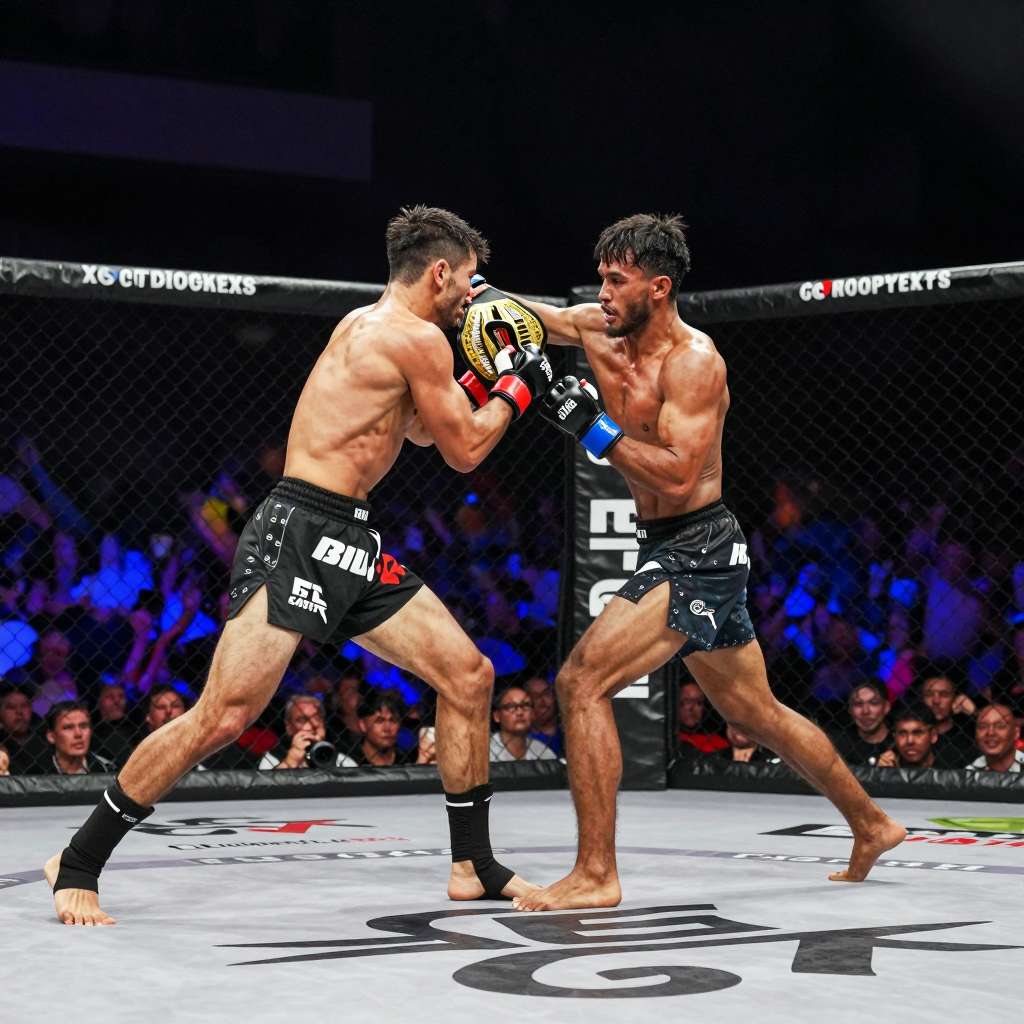
In the main event, Islam Makhachev weathered Ian Machado Garry’s fierce challenge to retain the welterweight title. The result was a unanimous decision victory. But the scorecards—49-46, 49-46, and 48-47—were hardly the numbers of a completely one-sided fight. Makhachev controlled the overall flow, yet Garry kept the pressure on the champion until the final bell and proved that he belonged among the elite.
For Makhachev, the victory further solidified his position as welterweight champion. After reaching the top at a new weight class beyond lightweight, he once again displayed the qualities of a champion who finds a way to win even in difficult fights. For Garry, competing in his first title challenge, going the full five rounds showed that he would not back down on the sport’s biggest stage. Even in defeat, it was a performance that left fans looking forward to his next opportunity.
In the co-main event, Mackenzie Dern successfully defended the women’s strawweight title for the first time against Gillian Robertson. With champions in both divisions keeping hold of their belts, UFC 330 became a card that etched the championship era even more clearly into the landscape rather than disrupting the balance of power in either division.
But the title fights were not the only moments that set Philadelphia ablaze that night. Charles Johnson secured a Scottish Twister submission against Eduardo Chapolin in the third round. Considered an exceptionally rare finish, the moment generated buzz far beyond the result itself. If the champions’ decision victories provided the card’s foundation, Johnson’s submission became the highlight fans would replay for years to come.
In the end, UFC 330 was an event defined by two belts being successfully defended—but it was far too eventful to be reduced to a simple story of championship victories. Makhachev’s hard-fought win, Dern’s first defense, and a rare submission all made their mark. Philadelphia witnessed both the stability of champions at the top and the unpredictable allure of mixed martial arts.
UFC’s Makhachev Keeps His Throne at Welterweight
When a fighter who dominated lightweight moves up to welterweight, the first questions are obvious: Will he be overpowered by larger opponents? Can he maintain his conditioning through 25 minutes of pressure? At UFC 330, Islam Makhachev delivered another emphatic answer by defeating Ian Machado Garry via unanimous decision.
The scorecards read 49-46, 49-46, and 48-47. On paper, Makhachev’s victory was clear. But the final 48-47 also showed that this was not simply a one-sided title defense. He controlled the overall flow of the fight, yet the young and sharp challenger Garry managed to drag the champion into a deep battle during certain stretches.
The significance of this victory goes beyond merely retaining the belt. After moving up in weight, Makhachev proved that his ability to manage a fight and navigate danger remains at the very highest level. The way he absorbed his opponent’s attacks and secured the rounds he needed to win, even when the momentum threatened to shift, showcased the completeness of a true champion.
At UFC 330, Makhachev was both an “overwhelming champion” and a “champion who passed a difficult test.”
For Garry, this loss is also difficult to view as a simple setback. As the No. 1 contender, he went the full distance with the champion and made it a close fight on one of the scorecards. He fell short of the title, but he left the night with the impression that he can compete among the elite of the welterweight division.
Meanwhile, Makhachev’s legacy has only grown stronger. After building a dominant reign at lightweight and then successfully defending the welterweight title, he has reached a point where it is no longer enough to describe him as merely a great fighter in one division. Rather than a flashy finish, this victory will be remembered as a championship triumph in which he withstood the toughest questions on the biggest stage.
Dern’s First UFC Title Defense and a New Front in the Strawweight Division
Becoming a champion is difficult, but staying one is even harder. At UFC 330, Mackenzie Dern defeated Gillian Robertson to successfully defend her women’s strawweight title for the first time, proving that she is not merely a fighter who captured the belt, but a champion capable of leading the division.
This victory is significant not because it instantly reshaped the strawweight landscape, but because it made the competition centered around Dern even clearer. A champion’s first title defense is a stage that tests both the pressure of holding the belt and the level of preparation required to keep it. Dern has cleared one of the toughest hurdles a champion can face.
Robertson, in particular, possessed both finishing ability and elite grappling credentials. That meant Dern had to do more than simply showcase her strengths—she had to prove them against a top-level contender. Regardless of the specific fight statistics, the result itself—successfully defending her title for the first time—adds even more weight to Dern’s championship era.
Now, attention turns to the style of her next challenger. Will someone step forward and meet Dern head-on in her own grappling territory? Or will a striker offer the answer by controlling distance and using precise striking to keep the champion from closing in?
Dern’s next fight may be more than just another title bout. It could become a new front in the UFC women’s strawweight division—one that determines whether the division is heading toward an era of grappling champions, or whether a counterattack from striking-based challengers is about to begin.
UFC 330 Undercard: The Moment the Veterans’ Era Began to Fade and New Names Rose
The expectation that Edson Barboza’s kicks would once again produce a highlight-reel moment vanished at 1:32 of the second round. Esteban Ribovics stopped the Brazilian veteran with a precise flurry of punches. The message left by UFC 330 was clear: star power still carries weight, but inside the Octagon, the next generation is not waiting around.
Ribovics Makes His Mark by Surpassing Barboza
Ribovics defeated Barboza by second-round TKO. For Barboza, who spent years establishing himself as a symbol of spectacular kicking attacks across the lightweight and featherweight divisions, it was a disappointing result. For Ribovics, however, it was the kind of victory that could change the course of his career.
This was more than just a knockout. By taking down a proven veteran, Ribovics showed that he could no longer be viewed as merely another prospect. From the UFC matchmakers’ perspective, the win also gave them a clear reason to pair him with higher-level opposition.
Gore’s Decision Victory Raises a New Question at Welterweight
Tresean Gore defeated Vicente Luque by unanimous decision, with the judges scoring the bout 30-27, 30-27, and 29-28. It was far from an easy win, but its significance lies in the fact that Gore maintained control of the fight all the way to the end against Luque, a fighter accustomed to both experience and pressure.
Luque has always been a dangerous action fighter and has served as a proving ground for many welterweights. Gore passed that test. Attention now naturally turns to his next opponent. If this victory was not a one-off upset, Gore could establish himself as a fighter capable of shaking up the upper-middle tier of the welterweight division.
Charles Johnson’s Scottish Twister: UFC 330’s Strangest Highlight
But the most unusual and striking moment of the night belonged to someone else. Against Eduardo Chapolin, Charles Johnson completed a Scottish Twister submission at 1:36 of the third round.
Twister-style techniques are rarely seen in the UFC. Because they require simultaneous control of an opponent’s torso, neck, and spinal line, creating the position—and finishing the submission once it is secured—is extremely difficult. That is why Johnson’s finish became more than just another victory.
Emerging between the tension of a title fight and the explosive force of a knockout, this rare submission was a highlight that will keep UFC 330 memorable for a long time. For the fans, it delivered the shock of seeing “that technique” actually happen in a fight. For Johnson, it offered a chance to etch his name into the spotlight in an instant.
The UFC 330 undercard did not remain in the shadow of the main event. Ribovics’ knockout, Gore’s commanding decision win, and Johnson’s rare submission all pointed in the same direction. Even as the veterans’ names continued to shine, a new wave of fighters was already preparing to take over the next stage.
After UFC 330, the Next War Has Already Begun
UFC 330 was a night when two champions defended their belts. But this was far from the end of their divisions. If anything, it was the starting point for the next war.
Islam Makhachev retained his welterweight throne with a unanimous decision victory over Ian Machado Garry, winning 49-46, 49-46, and 48-47 on the scorecards. It would be difficult to describe the fight as completely one-sided, given Garry’s clear resistance, but after navigating some difficult moments, the champion ultimately had his hand raised. The more victories like this he stacks up, the stronger Makhachev’s legacy becomes.
Now, one question towers above the rest: How much longer can Makhachev’s reign over the welterweight division continue?
If he defeats his next challenger as well, he could move beyond simply defending his title and firmly establish himself as a champion who defines an era. On the other hand, if young, fast-rising fighters like Garry continue knocking on the door, the welterweight division is poised to become the UFC’s hottest stage—a place where a champion’s dominance collides with the relentless pursuit of the next generation.
The women’s strawweight division is no different. Mackenzie Dern’s successful first title defense means she is no longer the challenger. She has become the standard every contender must overcome. As grapplers, strikers, and emerging contenders continue to clash around the champion, the division’s next title fight is likely to attract even greater attention.
The Questions Raised by the UFC’s Next Big Cards
The impact of UFC 330 is still being felt, but the schedule is already turning toward the next wave of major matchups. Several names, in particular, are certain to command the fans’ attention:
- UFC 324: Gaethje vs. Pimblett
- UFC 325: Volkanovski vs. Lopes 2
- UFC 326: Holloway vs. Oliveira 2
- UFC 329: McGregor vs. Holloway 2
The matchup between Justin Gaethje and Paddy Pimblett is a collision of explosiveness and star power. Gaethje is a veteran capable of turning a fight upside down with one punch and relentless pressure, while Pimblett carries the attention and confidence of a new generation. The winner will not merely claim victory in one fight—they will gain a greater voice in the lightweight division and its surrounding super-fight landscape.
The rematch between Holloway and Oliveira is another war fans have every reason to anticipate. Both fighters are known for their aggressive pace and finishing ability, meaning this matchup could become a major talking point not only because of the result, but because of the battle itself. If cards such as Volkanovski vs. Lopes 2 and McGregor vs. Holloway 2 follow, the UFC’s upcoming numbered events will expand beyond simple rankings battles into clashes between generations and legacies.
Of course, a direct showdown between Makhachev and any of these stars remains purely hypothetical for now. But if the champion continues winning at welterweight while lightweight’s biggest names prove their presence in major fights, talk of a super-fight will inevitably grow.
The true message left behind by UFC 330 is clear. The champions survived, the veterans continued to endure, and the rising stars made their names known. Now, the war has already begun to determine who will take the next step toward the belt inside the Octagon.
Comments
Post a Comment