Unidentified Human Remains Found in the Tucson Desert: Could They Be Linked to Nancy Guthrie’s Disappearance?
 \n
\n
Pima County Sheriff’s Department: The First Name That Came to Mind After Bones Were Found in the Desert
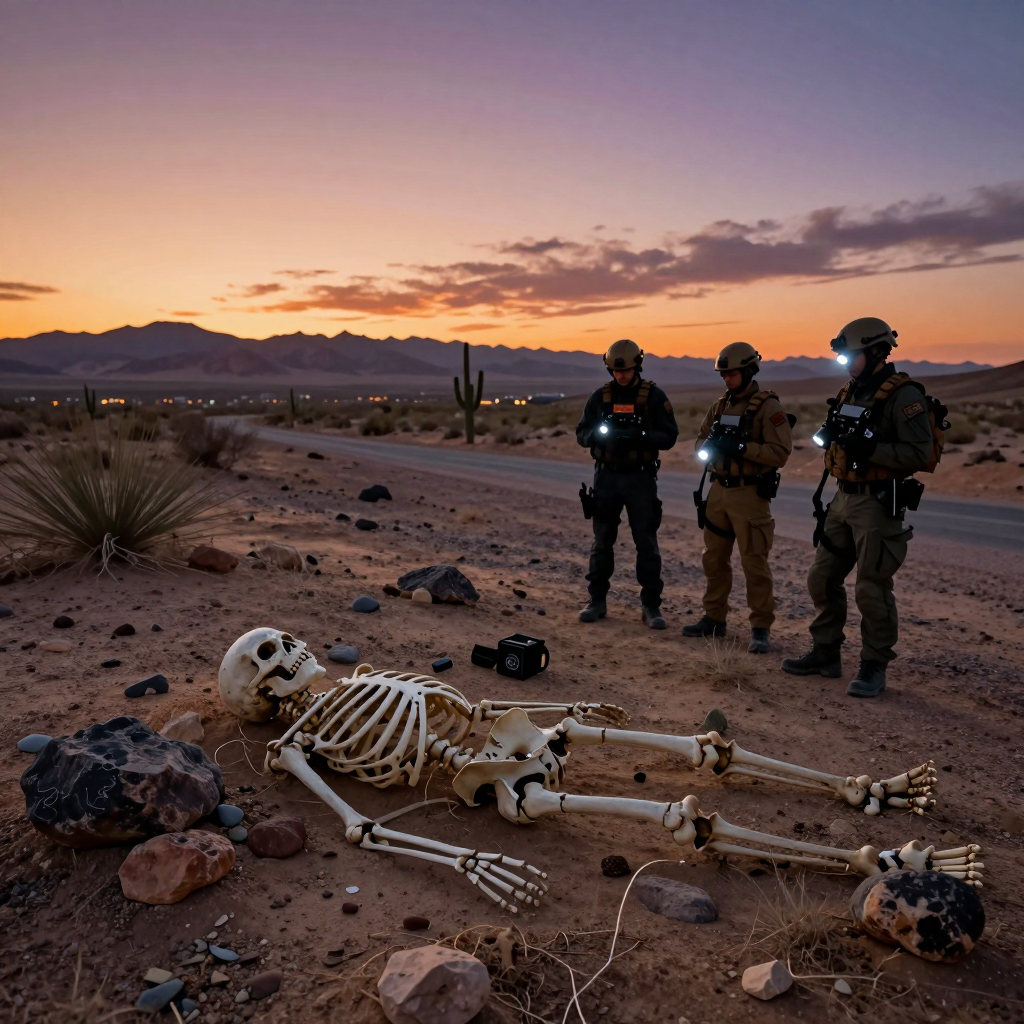
News that human remains had been discovered in the quiet desert near Tucson immediately brought one name to mind: Nancy Guthrie, whose disappearance has drawn national attention. The remains were found in a desert area near West Ajo Way and South La Cholla Boulevard—approximately 15 miles from Guthrie’s home, according to reports.
Given the distance, it was natural for public speculation to grow. The vast desert can easily conceal traces, and a missing-person case alongside the discovery of human remains always appears to suggest a powerful connection. In some reports and across social media, the question spread quickly: “Could it be Nancy Guthrie?”
However, the Pima County Sheriff’s Department drew a clear line from the outset. PCSD stated that the remains appeared to have been at the site for an extended period and that, at this time, there was no indication they were connected to Guthrie’s disappearance. The key phrase was unequivocal: “no indication of connection at this time.”
This statement was more than a simple denial. In a missing-person investigation receiving national attention, the discovery of new human remains can cause rumors and misinformation to explode. That is why PCSD emphasized the lack of a connection while also confirming its Search & Rescue response. The department established a baseline for the investigation first, ensuring that unverified possibilities would not be treated as fact.
Of course, saying there is “no indication of a connection” does not mean every question has been answered. The identity of the remains, the time of death, and the surrounding evidence at the scene still require crucial verification. But based on the information publicly available at present, this case appears less like a breakthrough in the Nancy Guthrie investigation and more like another unidentified death that had remained hidden somewhere in the Tucson desert for a long time.
And that is precisely what makes the case even heavier. The public’s attention is fixed on a high-profile missing-person case, but the bones discovered in the desert may still hold the story of someone who has yet to have even their name returned to them.
“There Is No Connection”: The Repeated Official Message from the Pima County Sheriff’s Department
News that human remains had been discovered in the desert near Tucson was bound to immediately appear connected to the Nancy Guthrie missing-person case, which has drawn national attention. However, from its initial response, the Pima County Sheriff’s Department repeatedly emphasized one firm message:
“At this time, there is no indication that these remains are connected to the Nancy Guthrie investigation.”
This message can be read as more than a simple confirmation of facts; it appears to be an effort to manage both the investigation and public opinion. As a missing-person case continues over time and public interest grows, even a single piece of information that appears to be a new lead can quickly turn into unverified speculation and rumors.
Rather than focusing on the fact that the remains were found approximately 15 miles from Guthrie’s home, the PCSD placed greater weight on the initial assessment that the remains appeared to have been at the site for an extended period of time. This could indicate that the remains may not align chronologically with a recent missing-person case. However, this is only an initial assessment, and the person’s identity and time of death must be confirmed through forensic analysis.
Why Draw the Line So Quickly?
The discovery of human remains is emotionally powerful news. Especially when the discovery occurs in an area where a missing-person investigation is underway, the public’s first question is naturally: “Could this be connected to the missing person?” The PCSD’s repeated use of the phrase “no indication of connection at this time” can be viewed as proactive framing intended to prevent that automatic association.
The key point is not that there is “absolutely no connection,” but that “there is currently no indication of a connection.” This wording leaves the door to the investigation open while preventing unverified reports from being accepted as fact. From the perspective of law enforcement, the guiding principle is to conduct every possible comparison procedure until the identity is confirmed, while releasing only verified facts to the public.
The Investigative Principle Revealed by Limited Disclosure
The PCSD disclosed the discovery location, its initial response, and the assessment that the remains appeared to be old. By contrast, it did not release information regarding the person’s sex, age, identity, precise time of death, or cause of death.
This limited disclosure may represent a decision made to protect the integrity of the investigation rather than a lack of information. Prematurely releasing detailed findings could cause unnecessary distress to the family and could also affect future efforts to confirm the identity or investigate the possibility of a crime.
Ultimately, the central message of the announcement is clear. The discovery of human remains is itself a separate and serious incident, but at this time, there is no basis for interpreting it as a breakthrough in the Nancy Guthrie case. What matters going forward is not speculation, but the forensic results and subsequent official announcements from the Pima County Sheriff’s Department.
Who Are the Skeletal Remains? A Forensic Investigation by the Pima County Sheriff’s Department Begins in Silence
There may be no name, no story, and no last witness left at the scene. The heat and wind of the desert, along with the passage of time, can erase many traces. Even so, investigators begin the painstaking work of recovering a person’s identity and the time of their death from a set of skeletal remains.
Regarding the discovery of human remains in a desert area near Tucson, the Pima County Sheriff’s Department stated that the remains appear to have been at the site for an extended period. However, based on the information currently available, the person’s identity, sex, exact time of death, and cause of death have not been confirmed.
Forensic investigations typically begin with preserving the scene. Small clues—including fragments of clothing, personal belongings, shoes, shell casings, vehicle tracks, and the condition of the soil—can be important in identifying the person and determining the circumstances of their death. In the desert, weather conditions, animal activity, and changes in the terrain can damage evidence, making early documentation and evidence collection especially crucial.
The next steps may include comparisons involving DNA, dental records, skeletal characteristics, and signs of previous surgery. Bones can reveal not only estimates of age, sex, and height, but also evidence of old fractures, illnesses, and surgical treatment. DNA submitted by family members and comparisons with missing-person databases are also key stages in the identification process.
The time of death cannot be established through a single test. It is estimated by examining the condition of the bones, surrounding vegetation, soil, and the degree of exposure to the climate. The PCSD’s statement that the remains “appear to have been at the location for an extended period” reflects this kind of preliminary assessment at the scene.
The most important thing is not to rush to a conclusion. The Pima County Sheriff’s Department stated that, at this time, there are no indications linking these remains to the disappearance of Nancy Guthrie. The public may want an immediate connection, but forensic science finds answers through comparison and verification—not speculation.
A set of unidentified skeletal remains is not the end of an investigation, but its beginning. Until the person—who may be someone’s family member—is given back their name, a quiet yet meticulous scientific investigation will continue.
The Greater Tragedy Hidden in Tucson’s Desert: The Challenges Facing the Pima County Sheriff’s Department
This latest discovery of human remains should not be viewed solely as an extension of the Nancy Guthrie missing-person case. The fact that someone’s remains lay undiscovered for so long across the vast desert landscape reveals a deeper danger facing Tucson and Pima County.
The desert erases traces and conceals time. Extreme heat, an arid climate, and expansive stretches of undeveloped land make searches for missing people extraordinarily difficult. Someone who becomes lost or suffers an accident may not be found immediately, and as time passes, identifying the person and determining the circumstances of their death become increasingly complicated.
In such an environment, the challenges facing the Pima County Sheriff’s Department go far beyond simply responding to a single report. Investigators must preserve the scene where the remains were found, cross-check DNA, dental records, and missing-person databases, and examine possible links to other cold cases. An initial assessment that the remains “appear to have been at the location for an extended period” may also mean that one person’s life and death remained outside the public record for a long time.
Pima County encompasses vast desert areas near the border. In this region, disappearances, cases involving people lost or stranded, accidents during migration, and deaths potentially connected to criminal activity can overlap. For that reason, unidentified remains are not merely case numbers in an investigative file. To a family, they represent an endless wait; to the community, an unanswered question.
No direct connection to the Nancy Guthrie case has been confirmed at this time. But the message sent by this discovery is clear: behind cases that attract national attention, there may be missing people whose names are not even known—and long-unsolved cases still awaiting answers. Tucson’s desert is not only a landscape of striking beauty; it is also a place where undiscovered tragedies can remain hidden for years.
Conclusion: Everything the Next Announcement Could Change — The Pima County Sheriff's Department’s Next Steps
The Pima County Sheriff's Department’s official position is clear: there are “currently no circumstances suggesting a connection” between the skeletal remains discovered in the desert near Tucson and the disappearance of Nancy Guthrie.
However, in investigations involving unidentified remains, initial assessments are not final conclusions. A single line in a DNA analysis report, a match—or mismatch—in dental records, or a new forensic analysis of the time of death could completely change the meaning of the case. That is why what matters now is not rushed speculation, but reading the next announcement carefully.
Three key points will be crucial to watch:
- Identification results: Whether the identity of the remains is confirmed through DNA, dental records, or medical records
- Time-of-death analysis: How specifically PCSD develops its assessment that the remains appear to have “been at the scene for an extended period of time”
- Changes in the case connection: Whether the position that there is “no connection” to the Nancy Guthrie case remains unchanged after the forensic results
This discovery may ultimately amount to nothing more than a single field response. On the other hand, it could become the breakthrough that finally provides answers in a missing-person case that has remained without a name for far too long. The next information released by the Pima County Sheriff's Department could bring about a significant shift—not only in how the Guthrie case is viewed, but also in how the recurring issue of unidentified remains in the desert areas of Pima County is understood.
Comments
Post a Comment