 \n
Frank Beard’s Final Backbeat Stops in Texas
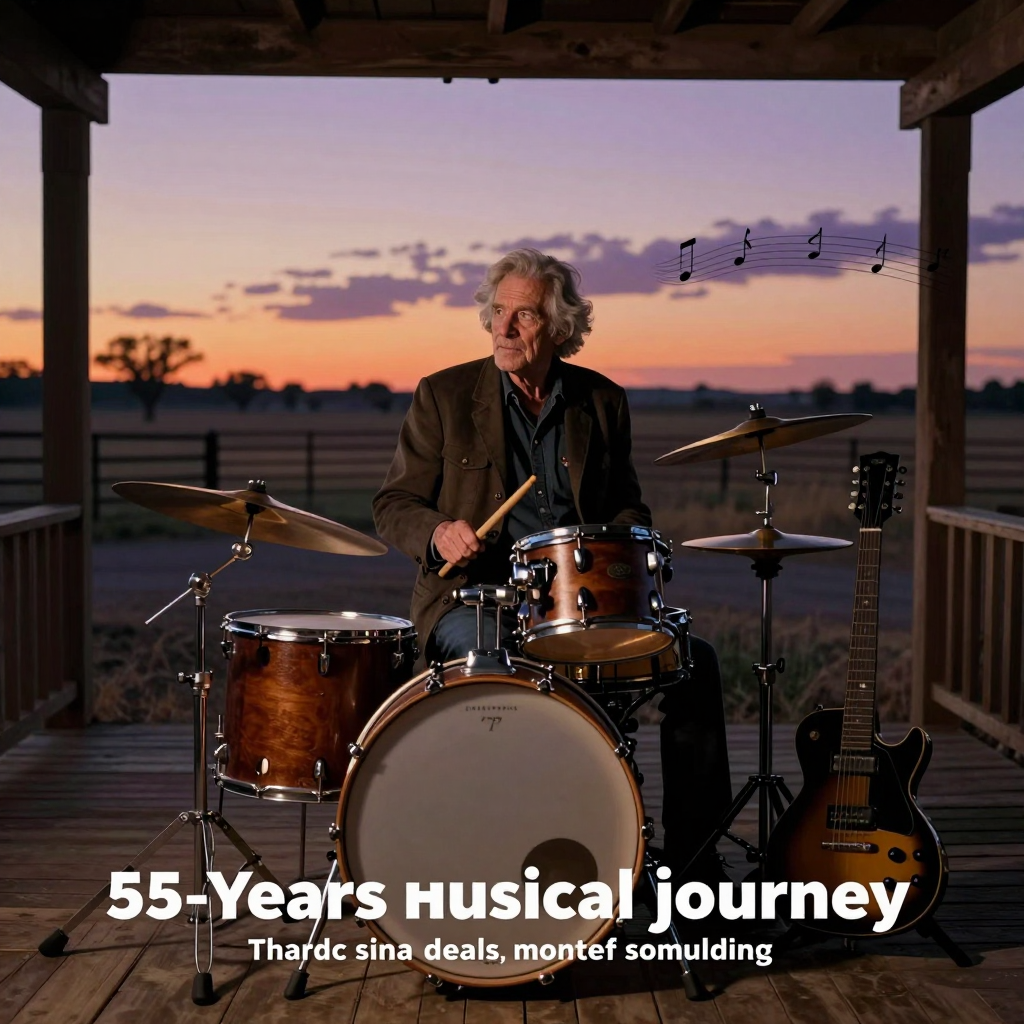
Frank Beard, the drummer who held ZZ Top’s rhythm together for more than 55 years, died on August 17, 2026, at the age of 77. He reportedly spent his final moments surrounded by family while receiving hospice care at his ranch in Richmond, Texas. Unlike the two bandmates remembered for their flamboyant beards, Beard maintained a relatively restrained presence, staying behind the scenes—yet his drumming was the rock-solid core of the ZZ Top sound.
The official cause of death has not been disclosed. The band has only stated that he had been dealing with health problems for an extended period, offering no specific diagnosis or medical explanation. According to local reports, no autopsy was conducted, leaving the precise circumstances surrounding his death undisclosed.
His declining health was not sudden. Frank Beard briefly stepped away from performances for treatment during ZZ Top’s 2025 Elevation Tour, and in August 2026, he ultimately withdrew from The Big One Tour as well. After some scheduled shows were canceled, fans began to realize that he might not be able to return to the stage.
But his final chapter cannot be viewed merely as an extension of canceled tours and health problems. Frank Beard had been with ZZ Top since 1969, helping drive the heart of Texas boogie rock. In a band where guitar and bass took center stage, he pushed the songs forward with an understated style, and his distinctive signature backbeat helped make ZZ Top sound like ZZ Top for decades.
Now, the drums that fell silent at a Texas ranch will never deliver another new beat, but the rhythms of “Sharp Dressed Man,” “Gimme All Your Lovin’,” and “Legs” remain alive. Frank Beard’s absence will not simply be remembered as the loss of a drummer, but as the moment when one of the most enduring engines in American rock finally came to a stop.
The Health Problems Frank Beard Revealed—and the Reality of Touring
A single absence can seem like nothing more than a scheduling change. But Frank Beard’s departure from the stage during ZZ Top’s The Big One Tour in 2026, following the suspension of the 2025 Elevation Tour, was different. This was not simply the story of a drummer missing a handful of shows. It was more like a sign of the long, difficult stretch a veteran rock musician in his 70s had endured while trying to balance his health with life on the road.
In March 2025, ZZ Top announced that Beard would temporarily step away from the tour due to a health issue requiring immediate treatment. At the time, no specific diagnosis was made public, but the problem did not end as a brief bout of poor condition. In August 2026, he once again withdrew from The Big One Tour because of health concerns, and some of the performances scheduled afterward were canceled.
The situation exposed the reality of touring in classic rock. For a band with a long career, performing is not only a place to meet fans; it is also how the band keeps its musical legacy alive in the present. But travel, soundchecks, long hours of waiting, and the relentless cycle of performing day after day are anything but light demands for musicians in their 70s. A drummer, in particular, is responsible for maintaining the rhythm and energy throughout the entire show. Even with careful management of his stamina backstage, there is no escaping the tension and physical strain of live performance.
Frank Beard’s health condition and the exact cause of his death have not been officially disclosed. Still, the pattern of his absence from touring for more than a year suggests how long he may have been trying to find a balance between recovery and performing. For fans, it was a painful absence—but that absence itself became a record of just how long he had remained onstage.
In the end, his absence was not merely an event that affected ZZ Top’s concert schedule. It also raised questions about rock ’n’ roll’s endurance. How long can legendary bands continue to tour? And how should fans view the health and lives of the musicians behind the “unchanging image” they see onstage? Frank Beard’s final year made those questions impossible to avoid.
Frank Beard’s Signature Backbeat, the Invisible Center That Drove ZZ Top
When listening to “Sharp Dressed Man,” “Legs,” or “Gimme All Your Lovin’,” the first thing that usually grabs the ear is Billy Gibbons’s razor-sharp guitar riff. Yet the true engine that kept that dazzling sound driving forward was Frank Beard’s restrained drumming. He never played for show, but the heavy, relentless momentum unique to ZZ Top began at his fingertips.
Frank Beard’s drumming was, in a word, understated yet powerful. Rather than filling the spaces between guitar solos with complicated fills, he maintained precise timing and a rock-solid backbeat, ensuring that the entire song never lost its balance. This simplicity was not a deficiency—it was a choice. In ZZ Top’s lineup, where guitar and bass stood at the forefront, the drums became the central axis that determined the weight and speed of each song without ever overpowering it.
The rhythm of “Gimme All Your Lovin’” in particular captures ZZ Top’s evolution from blues-based Texas boogie rock into a modern rock band of the MTV era. Frank Beard seamlessly combined the feel of mechanical electronic rhythms with an unmistakably human groove. As a result, the song sounded sharp and sophisticated without ever feeling cold, gaining a driving force that worked equally well on the radio, the dance floor, and the rock concert stage.
His role in “Legs” was much the same. The song is strongly remembered for its synthesizers and striking visual style, but without its recurring drum pattern, all those elements would have remained little more than stylish decoration. Beard’s drumming held the song’s center in place, creating a solid foundation over which the bass and guitar could move freely.
That is also why Billy Gibbons described him as “one of the most naturally innovative drummers.” Frank Beard’s innovation did not lie in a contest of flashy technique, but in the instinct to know what to leave in rather than what to add. His signature backbeat transformed ZZ Top’s music from merely fast and loud rock into a distinctly Texan groove that made bodies move almost on their own.
In ZZ Top, where the two bearded frontmen onstage naturally commanded attention, Beard could often seem like the quietest presence. But now that his drumming has stopped, fans can feel more clearly than ever just how immense that quiet presence truly was. Behind every ZZ Top guitar riff, there was always Frank Beard’s unshakable beat.
‘True Son of Texas’ Frank Beard: More Than a Drummer, a Regional Icon
There is a clear reason American media do not describe Frank Beard, who rose from the small town of Frankston to stages around the world, as simply “ZZ Top’s drummer.” He was a musician who played the rhythm of Texas rock—and, at the same time, a figure who carried the region’s ruggedness, humor, and relentless energy into global popular culture.
ZZ Top has always been a band difficult to separate from its sense of place: Texas. Their sound blended blues, boogie rock, the laid-back groove distinctive to the South, and gritty guitar tones, capturing not urban sophistication but the dust of the road and the heat of the barroom. Frank Beard’s drumming was the foundation that most steadily supported that identity. Rather than pushing himself to the forefront, he provided a solid backbeat that allowed the guitar and bass to move freely.
That is also the context behind Billy Gibbons describing him as “one of the most naturally innovative drummers.” Beard’s playing was never showy, but it was far from ordinary. He captured the shuffle feel unique to Texas boogie with precision, while bringing a modern, sharply defined rhythmic sensibility to MTV-era hits such as ‘Sharp Dressed Man,’ ‘Legs,’ and ‘Gimme All Your Lovin’.’ Behind ZZ Top’s ability to grow from a regional band into a global rock brand without losing its roots was Beard’s flexible drumming.
The fact that American regional media repeatedly highlighted his hometown and his performance history in Texas is also significant. This was more than simply reporting the passing of a famous rock star; it was closer to honoring one of the symbols Texas gave to the world of music. Like the uniquely playful irony of ZZ Top—a band in which the member without a beard bore the surname ‘Beard’—Beard embodied both serious musicianship and broad popular appeal.
That is why the expression “true son of Texas” is more than mere rhetoric. Frank Beard was born in Texas, played the rhythm of Texas, and used that rhythm to move audiences around the world for decades. His absence marks not only a void in ZZ Top, but also shows that the era when American rock transformed regional voices into a global language has moved one step farther away.
After Frank Beard, Can ZZ Top Still Be ZZ Top?
Now that Frank Beard has departed following Dusty Hill, only one original member of ZZ Top remains: Billy Gibbons. The band can keep its name, and its signature songs can continue to be performed onstage. But the question fans will naturally find themselves asking is more fundamental: Does that sound—and that stage presence—still count as ZZ Top?
ZZ Top was never simply a band remembered for beards, sunglasses, and hot-rod imagery. It was more like a single, perfectly interlocked rhythm machine—one completed only when Billy Gibbons’s guitar, Dusty Hill’s bass, and Frank Beard’s restrained backbeat worked together. Beard’s drumming, in particular, rarely demanded the spotlight. Instead, it gave the guitar riffs and bass a solid foundation, binding them together with quiet authority. His absence means far more than a simple change of personnel.
Of course, ZZ Top has already continued performing with Elwood Francis following Dusty Hill’s death. The way classic rock bands sustain long careers on the road is also broadly familiar. A session musician or new member joins the remaining core member, and the band recreates the beloved catalog live. As a brand, ZZ Top can certainly continue.
But Frank Beard was not merely a drummer brought in for touring. He was a founding member who helped shape the band’s rhythmic language from 1969 onward. The drive heard in songs such as “Sharp Dressed Man,” “Legs,” and “Gimme All Your Lovin’” came not from flashy drum solos, but from precise timing and a heavy, unmistakable groove. That sensibility is difficult to replace completely with nothing more than sheet music or a concert setlist.
From here on, ZZ Top will have to find a balance between two identities. On one side is ZZ Top as a living rock band led by Billy Gibbons. On the other is ZZ Top as a cultural legacy, charged with preserving the sound created by the original three-piece lineup. There is no way to declare one side definitively correct. But if the band continues to take the stage, it will need to do more than simply reproduce Frank Beard’s signature backbeat. It will need to honor the spirit of the rhythm he created.
In the end, ZZ Top can continue. But the name may now come to represent less a present-day band made by three Texas musicians together and more a legacy carried forward by its surviving member and new players. What fans hear in the future may not be exactly the same ZZ Top. Yet the moment that difference is acknowledged, Frank Beard’s place in the band’s history may become even more unmistakable.
Comments
Post a Comment