2026 Nagoya Asian Games: A Complete Overview of South Korea’s Gold Medals, Empty Stands, and Emerging Sports Trends
 \n
\n
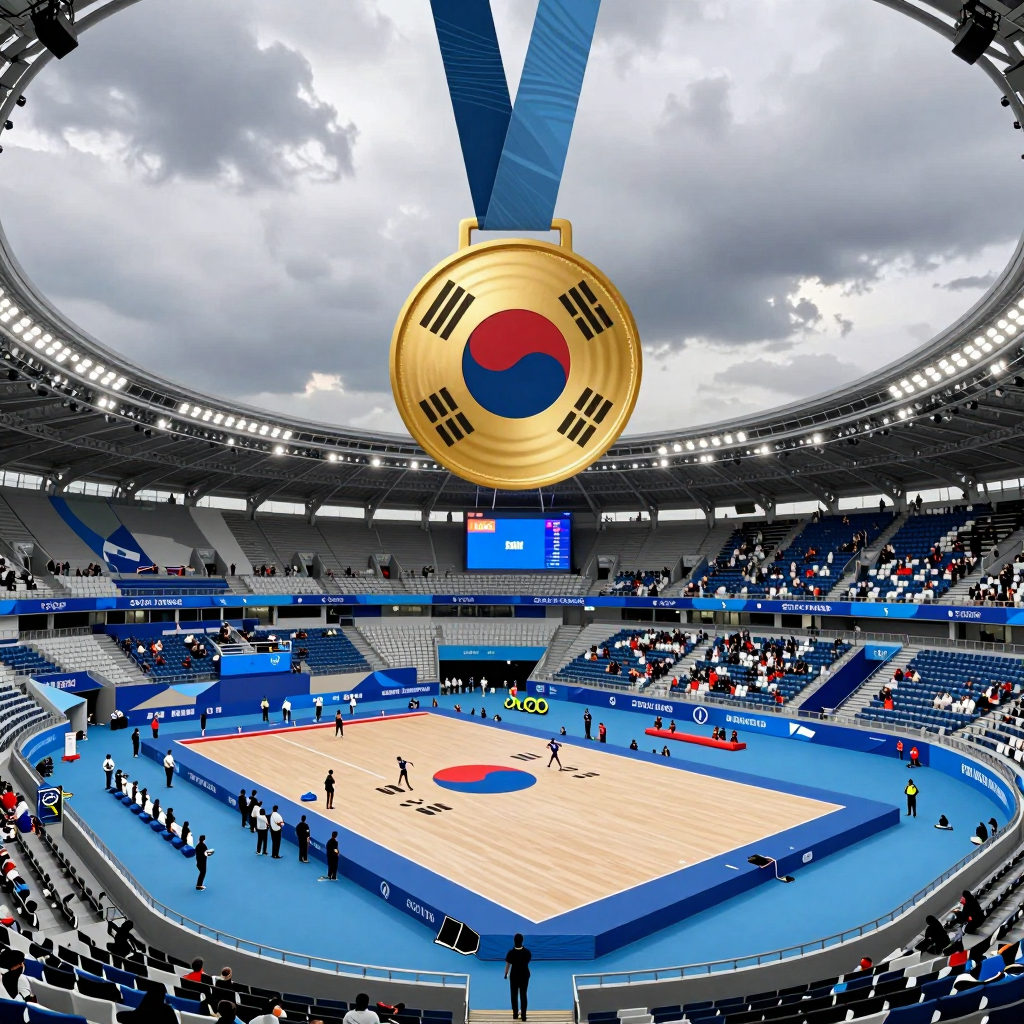
The Empty Stands Revealed Behind the Asian Games’ Spectacular Flame
“IMAGINE ONE ASIA.” With a message calling on the world to imagine one Asia, the flame of the 2026 Aichi-Nagoya Asian Games was lit. The opening ceremony, which combined Japan’s traditional culture with cutting-edge technology, was undeniably dazzling. Yet whenever the cameras captured a wide view of the stadium, they also revealed a scene at odds with the festive atmosphere: large sections of the approximately 30,000-seat stands were empty.
Even more shocking were the television ratings in Japan. An analysis found that the broadcast of the opening ceremony drew a rating of just 0.9%. Compared with the Games’ status as Asia’s largest multi-sport event, it is difficult to avoid calling this a disappointing start.
The Asian Games’ weak initial appeal cannot be viewed simply as a failure to draw an audience for the opening ceremony. In Japan, powerful sports content—including professional baseball, the J.League, and international baseball tournaments—is already consumed as part of everyday life. The fact that the Asian Games have relatively weaker brand power than the Olympics or the World Cup may also have played a significant role.
The ideal of “One Asia” also encountered the walls of reality. Controversy over the event’s management, including the early departure of some delegations during the entrance ceremony, left small cracks in the message of unity. It appears to have become an era in which spectacular flames and the language of peace alone are no longer enough to capture spectators’ interest or win the empathy of participating nations.
Ultimately, this scene leads to an important question for the Asian Games: What will the continent’s biggest sporting festival now use to draw spectators into stadiums and in front of their screens? How the Games connect new sports, digital content, rivalry matches, and local fan bases is expected to become the key challenge determining their future success.
The Asian Games and the Gap Between the Ideal and Reality of “One Asia”
The 2026 Aichi–Nagoya Asian Games have adopted the slogan “IMAGINE ONE ASIA”—in other words, imagine one Asia. The opening ceremony combined Japan’s traditional culture with cutting-edge technology, visually expressing messages of unity, connection, and the future. On the surface, it presented an idealistic vision of Asia coming together through sport.
But reality was not as simple as the slogan suggested.
Reports emerged that some delegations left the opening ceremony before it ended, while controversies also arose over the way the athletes’ parade was conducted and over procedures related to national representation. These issues were compounded by empty seats and low local television ratings, prompting assessments that the ceremony’s spectacular production did not immediately translate into public engagement or commercial success.
Sport may be able to pause conflict for a moment, but it cannot erase every boundary in the real world.
The Asian Games are a vast sporting festival bringing together 45 countries and a Refugee Team. Yet each participating nation has its own political relationships, historical perspectives, territorial disputes, and domestic public opinion. This is precisely what makes the phrase “One Asia” so powerful. Because it is a goal that is difficult to achieve in reality, the sporting arena continues to speak of that ideal.
This year’s Games reveal the two faces of a major sporting event. On one side are athletes crossing borders and languages to compete and connect with one another. On the other, the realities beyond the stadium remain plainly visible in the form of diplomatic tensions, operational confusion, and public indifference.
In the end, what matters may be less the staging of perfect harmony than the process by which Asia’s many different nations gather in the same arena, compete, and coexist. The Asian Games cannot completely transcend politics and reality, but they remain meaningful because they create, at the very least, a space for dialogue and encounter.
The Next Generation of the Asian Games: The Questions Teqball Is Raising
Players handle a soccer ball with their feet, but the game is played on a curved table resembling a ping-pong table. Teqball, which appears to combine soccer and table tennis, has made its way onto the Asian Games stage for reasons that go beyond simply adding “one more new sport.”
It can be played in a relatively small venue, and a single exquisite return or volley can spread across the world through social media in the form of a short video. This signals that the formula for multisport festivals—once dependent on massive stadiums and lengthy broadcasts—is beginning to change.
Sports Content Built on Short, Powerful Moments
Teqball’s greatest strength is its immediacy. Even without knowing the rules in detail, viewers can be captivated by the players’ precise ball control, unpredictable rallies, and sudden scoring moments.
It has particular advantages in the digital environment:
- Highlight-friendly: A single point can become a complete short-form video.
- Space-efficient: Events and experience zones can be operated without a large stadium.
- A natural connection to soccer fans: Because it uses familiar soccer skills, the barrier to entry is low.
- Potential for participatory content: Beyond professional matches, it can easily expand into amateur challenges and influencer content.
This is also why the Asian Games are looking beyond medal competitions in traditional sports to secure new sporting moments that younger generations will want to consume.
The Potential Revealed by Korea’s Rapid Adaptation
At this year’s competition, South Korea’s Lee Jun-seok advanced to the men’s singles final in teqball, securing at least a silver medal. Although the sport is still unfamiliar to the Korean public, his rapid emergence as a competitive force in a fledgling discipline carries significant meaning.
When new sports are adopted onto the international stage, Korean sports have generally moved quickly to establish athlete development programs, technical analysis, and support systems. The same kind of “first-mover strategy” could continue in teqball. Expanding medal prospects beyond traditionally strong events will, in the long term, become an important foundation for the national team’s competitiveness.
The Grand Festival Is Becoming Smaller and Faster
In the past, the Asian Games revolved around large stadiums, national-team stars, and live television broadcasts. Going forward, however, a sport’s influence is likely to depend less on the scale of its competition and more on how easily people can watch, share, and enjoy it themselves.
Teqball is unlikely to attract as much immediate attention as soccer or athletics. Even so, the sport is something of an experiment the Asian Games are presenting to future audiences. If a single rally that begins on a small table can travel through mobile screens and spread around the world, the next stage of the multisport festival will become far more digital and participatory than it is today.
Korea’s Asian Games Medal Strategy: Moving Beyond Its Familiar Strongholds
South Korea’s first gold medal came in an unexpected event. At the 2026 Aichi-Nagoya Asian Games, Seong Seung-min won the women’s individual modern pentathlon, delivering the Korean delegation’s first gold medal. The fact that Korea opened its campaign in modern pentathlon—not archery, taekwondo, or fencing—is highly symbolic.
Korea has set a target of 40 gold medals at this Asian Games. Its traditional powerhouse events remain the most important foundation. To make the overall target realistic, Korea must secure medals steadily in archery, taekwondo, fencing, short-track speed skating, and other established events. However, with international competition becoming increasingly tight, there are too many variables to fill the medal tally through familiar events alone.
Medal competitiveness now depends not only on maintaining strength in the events Korea has traditionally excelled at, but also on how quickly it can seize the opportunities emerging in new events.
The Message Behind Modern Pentathlon’s First Gold
Seong Seung-min’s gold medal means more than simply winning the first title of the Games. Modern pentathlon requires a combination of swimming, fencing, equestrian, shooting, and running skills. Reaching the top is difficult with outstanding talent in just one discipline; systematic development and long-term support are essential.
Korea’s early gold medal in this event shows that its medal base is expanding beyond traditional sports. It can also be seen as an example of medal portfolio diversification—a strategy that reduces the risks arising when results are concentrated in a few events while building competitiveness across a broader range of disciplines.
Teqball Final Appearance Shows the Potential of Getting Ahead in New Events
Korean athletes have also made their presence felt in teqball, an emerging sport. Lee Jun-seok reached the men’s singles final, securing at least a silver medal. Combining the footwork of soccer with the reflexes of table tennis, teqball remains unfamiliar to many fans. But that also means it is a field where differences in national strength have yet to become firmly entrenched.
In events like this, rapid investment and the recruitment of specialized personnel are highly likely to translate into results. It is also worth noting that teqball features short, dynamic rallies that make it well suited to social media and video platforms. As the Asian Games continue adding new and urban sports, Korea’s strategy of gaining an early foothold could become an even more important competitive factor.
The 40-Gold Target Ultimately Comes Down to “Scalability”
Reaching the target of 40 gold medals will require both a steady harvest from traditional powerhouse events and breakthroughs in underrepresented and emerging sports. When results in strong events fall short of expectations, medals from sports such as modern pentathlon and teqball can become decisive pieces that change the entire landscape.
The direction Korean sports are showing at this Asian Games is clear: preserve the familiar formula for victory while seeking new opportunities in events where the competitive map has yet to be fully drawn. Seong Seung-min’s opening gold medal and Lee Jun-seok’s appearance in the final are signals that this change has already begun.
The Asian Games: A Glimpse of the Future in Empty Venues and Red-Hot Coverage
Even when referring to the same Asian Games, the scenes can look dramatically different. In host country Japan, empty seats at the opening ceremony and a 0.9% television viewership rating became major talking points. In South Korea, by contrast, a wide range of events—from swimming, table tennis, handball, shooting, volleyball, and basketball—have filled broadcasters’ schedules. Matches with compelling narratives, especially Korea–Japan clashes, are drawing particularly strong interest.
This gap is difficult to explain simply in terms of whether the Games are “popular” or not. The reason lies in how each country consumes the Asian Games—and in the different strategies they use to turn sports into content.
On-Site Excitement and Media Attention Can Be Different
The success of a major sporting event is difficult to judge solely by the number of spectators in the venues. Of course, empty seats can undermine the atmosphere and commercial appeal of the Games. But today’s sports fans experience competitions not only in stadiums, but also through television, OTT platforms, YouTube, and short-form clips.
That is also why South Korean broadcasters are actively covering a wide range of events. It is not only medal contenders that become content. Events where new stars may emerge, matchups that create rivalries, and competitions capable of producing short, powerful highlights can all capture attention.
Today, the excitement surrounding a sporting event depends more on which moments spread online than on how full the seats are.
Why South Korea Is So Active in Covering the Asian Games
For South Korean viewers, the Asian Games are more than just an international sporting event. They are a stage where viewers can witness the growth of national athletes, medal races, rivalries such as Korea–Japan and Korea–China matchups, and the emergence of the next generation of stars—all at once.
This year in particular, several factors are strengthening the appeal of Asian Games coverage:
- A diverse event lineup: Viewers have a broad range of choices, from swimming and table tennis to shooting and team sports.
- Medal-driven narratives: Stories can emerge even from unexpected events, such as the modern pentathlon’s first gold medal.
- Rivalry matches: Games such as the men’s basketball Korea–Japan final generate interest that goes beyond the result itself.
- Digital shareability: Emerging sports such as teqball can capture the attention of younger audiences through short videos alone.
In other words, the key to effective coverage is not showing every event in exactly the same way. It lies in quickly identifying the people, records, and rivalries that define each sport—and transforming them into stories.
The Future of the Asian Games Depends on Connecting the Venue with Content
The low level of interest in Japan shows that the Asian Games brand does not automatically guarantee success in every host country. In an environment where the Games must compete with the Olympics, the World Cup, and popular professional leagues, their significance needs to be communicated more clearly.
For the Asian Games to grow in the future, the following challenges will be just as important as staging a spectacular opening ceremony:
- On-site programs that allow residents of the host city to participate
- Event scheduling that connects popular sports with emerging disciplines
- Digital content that brings out the personal stories of athletes
- Broadcasting strategies tailored to viewing habits in each country
- Reasonable ticketing and transportation policies that enhance the venue experience
Ultimately, the contrast between empty stadiums and red-hot coverage is not a sign of crisis, but a scene that reveals the challenges ahead. The future of the Asian Games begins with bringing more people into the venues—but it also depends on making viewers feel that the Games are “their story” on the screens in front of them.
Comments
Post a Comment