 \n
\n
Kiwoom vs. KIA: The Last Gambit of the Last-Place Team in Gwangju
Judging solely by the standings and head-to-head record, the answer seems simple. KIA sits fourth in the league and remains in contention near the top, while Kiwoom is stuck in last place. KIA has also dominated this season’s meetings, leading 11–4. That is why this game at Gwangju-Kia Champions Field is expected to be a straightforward victory for KIA.
However, the final meeting of the season between Kiwoom and KIA includes a variable that cannot be explained by the standings alone: Kiwoom ace Ahn Woo-jin, returning after more than 10 days of ample rest. The moment Ahn takes the mound, this game changes from a matchup between a top-tier team and the league’s worst team into a tense pitching duel in which one mistake could completely turn the momentum.
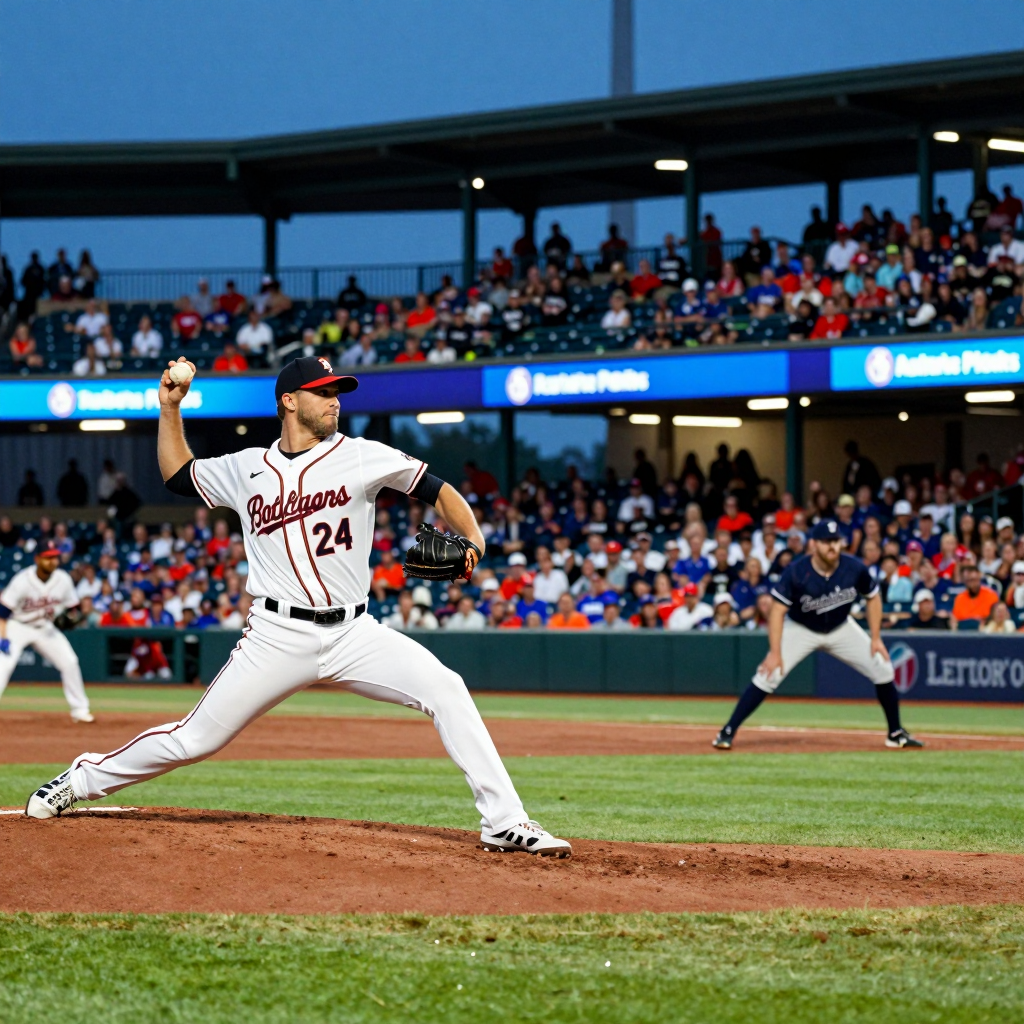
Ahn’s role is clear. He must contain KIA’s dangerous hitters from the very beginning with his powerful fastball and strikeout ability, while taking responsibility for as many innings as possible. To ease the burden on Kiwoom’s bullpen, he needs to last beyond six innings—ideally seven or more. If KIA fails to score early against Ahn, significant pressure could build on the home team sooner than expected.
From Kiwoom’s perspective, the pressure is actually lighter. The urgency of the standings race is far greater on KIA’s side. KIA must also look ahead to a grueling stretch featuring NC, Doosan, LG, and KT. In such a situation, being tripped up by last-place Kiwoom could deliver a shock far greater than a mere loss.
Conversely, Kiwoom has all the ideal conditions for a classic giant-killing performance. Its ace is starting, the opponent is caught up in an important battle for position, and this game offers Kiwoom a chance to play for its pride against KIA in the final meeting of the season. If Kiwoom scores first and Ahn protects the lead, the atmosphere in Gwangju could turn tense much faster than expected.
In the end, the key will be the first three innings. If Ahn’s velocity and control prove the value of his rest, and Kiwoom’s lineup is the first to crack KIA starter Adam Oller, this game could easily develop into a close contest. KIA clearly holds the advantage in the broader picture, but once the single card named Ahn Woo-jin becomes a reality, Kiwoom’s final gambit as the league’s last-place team cannot be taken lightly.
Kiwoom vs. KIA, Ace vs. Ace… The Battle Begins with the First Pitch
Today’s real battleground in Kiwoom vs. KIA lies on the mound, not in the batting order. KIA is sending foreign ace Adam Oller to the mound at home, while Kiwoom counters with Woo-jin Ahn, who has had more than 10 days of rest. The standings and head-to-head record favor KIA, but if Ahn rediscovers his usual dominant form, the entire complexion of the game could change from the very first inning.
Home Ace Oller Must Guard Against Early Damage
Oller is the starting pitcher KIA trusts most. His job is to attack the strike zone aggressively at home, limit unnecessary walks, and seize control of the game early.
KIA cannot easily expect a big offensive outburst against Ahn. In the end, Oller must hold the line for at least six steady innings while keeping the damage to a minimum. The ideal script is clear:
- Get through the first three innings scoreless or with minimal damage.
- Limit extra-base hits allowed to Kiwoom’s lineup.
- Have KIA’s middle-of-the-order hitters turn one opportunity into runs in the middle or late innings.
If Oller falters first, KIA may be forced to turn to its bullpen earlier than planned, and the balance of a tight game could shift toward Kiwoom. For KIA, calculated inning management matters more than flashy pitching.
Ahn Woo-jin, Rested for 10 Days, Is Kiwoom’s Only Starting Point for an Upset
Kiwoom has a definitive game-changer in Woo-jin Ahn. With ample rest behind him, the key question is how sharp his fastball velocity and breaking-ball command will be early in the game.
If Ahn begins to pressure KIA’s top hitters with his fastball and pile up strikeouts, Gwangju-Kia Champions Field could be engulfed in tension much sooner than expected. Kiwoom’s desired scenario is simple:
Ahn goes deep into the game, and the offense does not waste one or two opportunities.
If Ahn can take responsibility for around seven innings, the burden on Kiwoom’s bullpen will be significantly reduced. For the last-place Kiwoom to pull off an upset against KIA, its ace must do more than simply pitch well—he must deliver a dominant performance that takes control of the game.
One Walk in the First Inning Can Change the Entire Game
Both pitchers have already proven their ability. That is precisely why the outcome is more likely to hinge on a small crack than on a spectacular moment. A leadoff walk, a mistake pitch with two outs, or one defensive wobble could change the flow of a pitchers’ duel.
KIA needs Oller to establish a steady rhythm and wait for the power of its lineup to emerge in the middle and late innings. Kiwoom, on the other hand, must have Ahn silence KIA’s hitters from the start, then create a game in which even a small number of runs is enough to protect a lead.
Ultimately, this game is less about who scores more runs than about which team can first turn its ace into someone it can truly trust. The result of the first pitch may be an ordinary strike—or the first warning sign of unease capable of shaking the entire game. That is what makes it worth watching.
Kiwoom vs. KIA: Byun Woo-hyuk and Han Jun-soo Tested in Kim Do-yeong’s Absence
The KIA lineup features unfamiliar names and a different batting order than usual. With Kim Do-yeong out, Byun Woo-hyuk steps in at third base, while Han Jun-soo makes his starting debut as the No. 2 designated hitter in place of Hwang Dae-in. Considering that their opponent is Woo-jin Ahn, who has had more than ten days of rest, this change carries significance far beyond a simple rotation adjustment.
Byun Woo-hyuk at Third: Defensive Stability and a Game-Changing Hit Needed
Kim Do-yeong’s absence is not merely a matter of losing one everyday starter. KIA could also lose some of its offensive speed, energy in the infield, and sense of expectation in scoring situations. Byun Woo-hyuk has been chosen to fill that void.
Byun’s first task is defense. In a Kiwoom–KIA matchup that could develop into a tight pitchers’ duel, even one small defensive mistake can immediately turn into a run. His priority will be protecting the hot corner with steady play.
At the plate, however, a more aggressive contribution will be required. Ahn takes away hitters’ timing with a blazing fastball and sharp breaking pitches. Rather than hunting only for extra-base hits from the outset, if Byun can punish pitches that enter the strike zone and turn them into hard-hit balls, he could give KIA’s lower order an entirely different level of weight.
Han Jun-soo Batting Second: The First Step in Solving Ahn
The most eye-catching decision is Han Jun-soo’s placement as the No. 2 designated hitter. KIA has placed Han behind Park Jeong-woo, followed by Castro and Na Sung-beom to form the heart of the order. The intention is clear: create opportunities for both early baserunners and extra-base damage.
Against Ahn, KIA must focus less on one explosive big inning and more on making the most of every limited opportunity. If Han can extend Ahn’s pitch count through stubborn at-bats or turn leadoff hitter Park Jeong-woo’s on-base success into a scoring opportunity, KIA could seize control early.
The Han Jun-soo–Castro–Na Sung-beom stretch is especially crucial, as it is where KIA will challenge Ahn’s stuff head-on. If that portion of the lineup goes down quietly, Kiwoom can comfortably lean on Ahn to work deep into the game and carry the contest into a bullpen battle on favorable terms. But if Han becomes the link that keeps the offense moving, KIA’s experimental lineup will begin to look like a genuinely convincing strategy.
The Experiment Will Be Judged by Shared Responsibility, Not Replacement
It is difficult for any one player to replicate Kim Do-yeong’s production in full. What KIA needs, then, is not a perfect replacement but a shared-responsibility structure that fills the void together. Byun must provide steady defense at third and power potential from the lower part of the lineup, while Han must connect the top of the order and create scoring chances.
In the end, the success of this lineup will depend less on how many hits KIA collects against Ahn than on how efficiently it converts its limited opportunities. Will Kim Do-yeong’s absence loom large, or will this become a day when KIA discovers the potential of a new combination? The Kiwoom–KIA matchup is shaping up to be a revealing test for KIA’s unfamiliar offensive experiment.
Kiwoom vs. KIA: The Market Favors KIA, but the Numbers Reveal Unease
If we look only at the win probabilities, the answer appears relatively clear. The market is leaning toward KIA’s home-field advantage. KIA’s odds to win sit around 1.50–1.62, while Kiwoom’s are in the 2.36–2.50 range. Prediction markets also rate KIA’s chances of winning at approximately 61%.
However, it is difficult to interpret these numbers as an automatic “comfortable KIA victory.” In the Kiwoom vs. KIA matchup, the market sees KIA as the favorite, but it is clearly drawing a line at the possibility of a blowout.
| Market Indicator | Assessment of KIA’s Edge | Interpretation |
|---|---|---|
| KIA win probability | Approximately 61% | The baseline scenario is a KIA victory |
| KIA to win by 1.5 runs or more | Approximately 47% | A close one-run game remains highly possible |
| KIA to win by 2.5 runs or more | Approximately 34% | A three-run-or-more blowout is far from certain |
| Total runs over 7.5 | Approximately 55% | A moderate-scoring game is expected rather than an extreme pitchers’ duel |
The key is the starting-pitcher matchup. KIA has the home-field advantage and an 11–4 record against Kiwoom this season. However, Kiwoom starter Woo-jin Ahn is a variable that cannot be judged by the standings alone. If the ace, who has had more than ten days of rest, comes out with his usual stuff, KIA’s lineup may struggle to score comfortably from the very beginning.
On the other side, KIA’s Adam Oller is also expected to manage the game steadily at home. Ultimately, if both starters minimize early damage, the game is likely to narrow naturally into a one- or two-run bullpen battle. That is why the market recognizes KIA’s chances of winning while remaining cautious about a handicap victory by a wide margin.
Why KIA Still Feels Vulnerable Despite Its Advantage
KIA also faces the very real burden of being without Do-young Kim. Starting Woo-hyuk Byun at third base and batting Jun-soo Han second as the designated hitter are tailored decisions aimed at attacking Ahn Woo-jin, but they also signal that KIA’s usual offensive structure is not fully intact.
If Ahn lasts six innings or more and disrupts KIA’s offensive rhythm with strikeouts, Kiwoom can keep the game within reach deep into the later innings. Kiwoom does not need a huge offensive outburst. The path is simple and clear: score first against Oller, then protect the lead built by its ace and bullpen.
Therefore, KIA is more likely to win, but this is not a game in which a dominant KIA victory can be taken for granted. The market’s view is clear: KIA has the higher probability of winning. But the moment Ahn Woo-jin takes the mound, Kiwoom becomes an underdog capable of turning the game on its head at any time.
Kiwoom vs. KIA: After a Pitching Duel Through Six Innings, the Real Battle Begins in the Seventh
The Kiwoom vs. KIA matchup is more likely to swing dramatically after the seventh inning than during the first six. On paper, KIA holds the edge in overall strength and head-to-head records, but the moment An Woo-jin takes the mound, this becomes more than a simple battle between teams in the standings.
Kiwoom’s ideal scenario is clear. An Woo-jin shuts down KIA’s top hitters from the beginning with his fastball and sharp breaking pitches, while Kiwoom’s lineup turns one or two opportunities against Oller into the game’s opening run. If Kiwoom reaches the end of the sixth inning with even a one-run lead, the last-place team could instead put pressure on KIA from a position free of expectations. If An Woo-jin can go deep into the game, KIA will have to restore the balance before the matchup turns into a battle of the bullpens.
For KIA, meanwhile, the key is for Oller to minimize early damage and hold his ground. Rather than expecting to score multiple runs in every inning against An Woo-jin, KIA must capitalize on brief opportunities created by a walk, an error, or a single extra-base hit. If the heart of the order featuring Han Jun-su, Castro, and Na Sung-beom connects properly just once, the momentum in Gwangju could quickly swing toward the home team.
After the Seventh: A Battle of Bullpens and Benches
If both starters perform their roles, the game will ultimately be decided by bullpen management and pinch-hitting moves. The market also acknowledges KIA’s advantage, while placing greater weight on the possibility of a tight game decided by one or two runs rather than a wide-margin victory. That reflects just how much weight this starting-pitching matchup carries.
- When Kiwoom is ahead: An Woo-jin’s pitch count and the possibility of his taking the mound in the seventh will be crucial. Pulling the ace too early could increase bullpen volatility.
- When KIA is ahead: The most stable setup is for the bullpen’s winning group to protect the lead after Oller exits. With the energy of the home crowd added in, KIA could gain an edge in late-inning focus.
- When the game is tied: KIA’s bench management in the absence of Kim Do-yeong, along with the aggressive baserunning of Kiwoom’s young hitters, could become unexpected variables.
Ultimately, this is both a game KIA is capable of winning and one Kiwoom can absolutely turn around because An Woo-jin is on the mound. If the game remains scoreless or separated by just one run through the sixth, the true battle begins in the seventh—in which one substitution at the right moment and one timely hit matter more than the standings.
Comments
Post a Comment