 \n
\n
Widow’s Bay: The Questions Raised by 14 Trophies
If a new horror comedy took home 14 Emmys after just one season, can we really call it simply a “hit”?
Apple TV+’s widows bay set a new record at the 2026 Emmys for the most awards won by a comedy series in a single season. The total combines six Primetime Emmy Awards with eight Creative Arts Emmy Awards. What makes the achievement even more extraordinary is the breadth of its wins, spanning Outstanding Series, lead and supporting acting, writing, directing, casting, and guest acting.
The significance of that number lies not merely in the sheer number of trophies. New series typically earn buzz first and receive recognition for their quality and influence in subsequent seasons. Widow’s Bay, however, secured critical trust, word-of-mouth popularity, and overwhelming awards-show support all at once, beginning with its debut season. In a comedy category packed with formidable contenders, its near-sweep suggests that the industry has embraced the series not as a passing fad, but as a new standard.
What makes the series even more intriguing is that it does not simply follow the conventions of the traditional sitcom. A cursed New England island, a mayor obsessed with reviving tourism through redevelopment, and residents wavering between reality and legend: Widow’s Bay brings together political satire, local-community drama, supernatural horror, and black comedy. It is funny yet unsettling, bizarre yet realistic.
The 14 Emmy trophies ultimately leave us with one question: Do viewers today really want “comedy” alone? Or have they been waiting for stranger, more layered stories that interpret an anxious reality through both laughter and fear? Widow’s Bay’s record appears to be the television industry’s clearest answer yet.
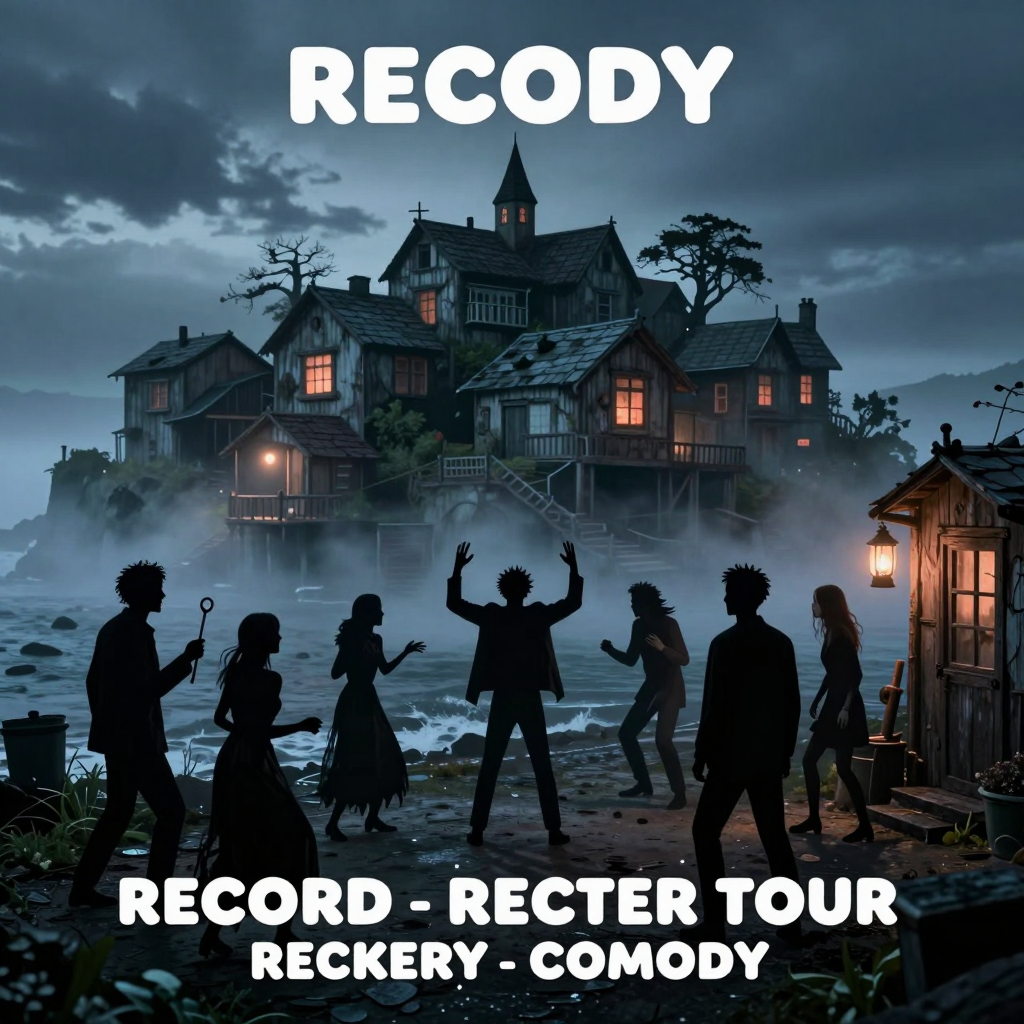
The Collision Between a Cursed Island and Tourism Development: The Horror Created by widows bay
Plans to revive a declining island as a tourist destination always sound plausible. Attracting more visitors, creating jobs, and filling empty storefronts once again—all of it seems like common sense. But in Apple TV+’s widows bay, tourism development is more than a local economic policy for Mayor Tom Loftis. It means directly confronting a legend the island’s residents have ignored for generations.
The setting—an isolated island off the coast of New England—gives the series’ horror a solid foundation. A place cut off by the sea, a faltering economy, the residents’ complicated attitude toward outsiders, and an ancient “curse” that no one can clearly explain all overlap. The mayor tries to package the island as an appealing tourism brand, but ironically, the ominous stories buried beneath it begin rising to the surface of reality in the process.
The Curse Unleashed by the Development Plan: The Black Comedy of widows bay
The humor in this work is never separate from the horror. Inside the mayor’s office, officials discuss tourism slogans and budget proposals, while outside the island, strange incidents keep unfolding—incidents that are difficult to explain. The residents react as if to say, “That’s just how this island has always been,” while the authorities deny what is happening or reduce it to an image problem that can be managed. It is precisely this gap that creates the distinctive black comedy of widows bay.
A story that can be sold to tourists as a mysterious legend may be, to the residents themselves, a reality they desperately want to avoid. The series uses this uncomfortable truth to sharply satirize the image-making of the tourism industry, the irresponsibility of local politics, and the long-standing silence within the community. The curse does not simply mean monsters or ghosts. It is closer to the way a neglected history, deep mistrust, and problems buried for the sake of survival all come rushing back at once.
“Is It Really a Curse?” Why the Question Makes the Laughter More Frightening
widows bay does not offer a clear explanation for its supernatural phenomena from the beginning. As a result, viewers are left wavering between two possibilities whenever something strange occurs: Is the island truly cursed, or are they witnessing a spectacle created by collective anxiety and political chaos among the residents?
That ambiguity also gives the comedy’s timing its power. Even when someone says something absurd, it is difficult to dismiss it as a simple joke, and even a minor administrative mistake begins to look like a sign of impending disaster. That is why, even after laughing, the thought lingers: “What if they were actually right?”
In the end, the most dangerous thing on this island is not the curse itself. It is the desire to turn everything into a tourist product—and the attitude that tries to cover up uncomfortable truths with promotional slogans. widows bay shows how naturally horror and comedy can coexist within the same frame when that desire awakens an ancient legend.
The People Who Designed Laughter and Fear at Once: The Balance of widows bay
In one scene, Mayor Tom Loftis makes a ridiculous mistake while obsessing over tourism promotion. Yet in the very next, the island’s ancient curse reveals its real face. The reason widows bay is neither a simple comedy nor a conventional horror series lies with the creative team’s meticulous control over this sudden shift in tone.
Katie Dippold, the Showrunner Who Plants Unease in the Laughter
Creator and showrunner Katie Dippold does not use horror merely as a backdrop for jokes. Instead, she layers supernatural unease over realistic concerns such as the tourism industry, local politics, and the residents’ livelihoods.
Mayor Tom Loftis’s redevelopment plan initially looks like the empty bravado of an incompetent public official. But as the island’s curse intensifies, his decisions transform into choices that threaten the entire community. Thanks to this shift, viewers find themselves laughing one moment and wondering the next, “Can anyone really escape this island?”
Dippold’s scripts make the timing of black comedy collide with horror’s ominous aftertaste within a single scene. Her Emmy win for Outstanding Writing in a Comedy Series is the clearest evidence that this dangerous combination works.
Hiro Murai Turns a Familiar Island into an Unfamiliar Nightmare
Director Hiro Murai transforms New England’s beautiful, tranquil landscapes into spaces that can never feel completely safe. Sunlit harbors, weathered signs, and quiet town halls all appear through his camera as places where the curse has seeped in.
In particular, the horror of widows bay begins with atmosphere rather than sudden jump scares. The silence that lingers after a conversation ends, the legends residents casually toss out, and the slightly misaligned gazes and compositions all leave behind a sense of unease—even after the comedic scenes are over.
Murai preserves the texture of a realistic community drama while making the entire island feel like a living entity. As a result, the setting becomes more than a simple stage: it becomes another character, one that mocks and threatens the people trapped within it.
An Ensemble That Made “Funny but Frightening” Possible
This distinctive tone would have been difficult to sustain without the cast’s performances. Matthew Rhys begins by portraying Mayor Tom Loftis as a boastful, ridiculous man, yet convincingly reveals the very human cracks that appear when he faces genuine terror. His win for Best Actor in a Comedy Series recognizes his achievement in moving between exaggerated humor and authentic fear.
As a figure who embodies the island’s superstitions and cynicism, Stephen Root turns the residents’ anxiety into sharp humor. Meanwhile, Kate O’Flynn, who plays the mayor’s secretary Patricia, brings an emotional center to the chaos through her awkward but earnest demeanor. Betty Gilpin’s intense guest performance adds even more force, allowing the horror narrative to grow deeper and more threatening after the season’s midpoint.
Ultimately, widows bay’s success does not lie simply in the fact that it blends genres. It lies in leaving behind the shadow of fear even when laughter releases the tension, and in never losing sight of the characters’ ridiculous humanity even when the horror grows overwhelming. That delicate balance is what makes the series the most distinctive comedy of the year.
widows bay: How Word of Mouth Turned the Island’s Curse into a Cultural Phenomenon
It wasn’t a massive marketing campaign that drew viewers in from the start. widows bay began with recommendations from a handful of viewers who described it as “strangely terrifying, but way too funny,” and before long, it had spread into a cultural phenomenon of memes, cosplay, and fan-created urban legends. People didn’t stop at simply watching the series—they began stepping into its world, as if they had become residents of the cursed island.
What Became a Meme Wasn’t the Monster, but the ‘Atmosphere of the Island’
The series spread not because of any single scene, but because of its unique atmosphere: a gloomy New England island, a mayor obsessed with the tourism industry, and residents who accept the curse as if it were the most ordinary thing in the world. Fans captured the island’s battered signs, bizarre local mascots, and ominous public notices, reworking them into everyday memes.
Jokes like “The tourism initiative has awakened the curse again” were also used to satirize real-life office culture, local politics, and the excesses of branding. This is also why the horror premise wasn’t consumed as something purely heavy or grim. Viewers could fear the island’s ominous presence while still transforming that very menace into a language of laughter.
An ‘Interactive World’ Built by Cosplay and Fan Fiction
What drew the fandom’s strongest response was the room left in the characters. Mayor Tom Loftis’s exaggerated confidence, Patricia’s awkward but fiercely loyal nature, and the cynical reactions of residents who believe in the curse all became easy-to-follow symbols. Cosplay expanded beyond recreating elaborate costumes, evolving into performances of everyday life within the series—such as “a tour guide from the cursed island” or “an employee at the mayor’s office.”
Fans then took it one step further, creating legends about an island that does not exist. Fake tourist brochures, short videos styled as interviews with island residents, and posts explaining the curse’s origins accumulated online. In the process, the world of widows bay grew beyond the set of a drama and became a space for collective creation.
The Power to Turn Viewers into Residents Rather Than Spectators
These reactions were possible not simply because the series mixed horror and comedy. Widow’s Bay presents the supernatural event of the curse less as a grand heroic saga and more as a local community problem. The residents worry about tourists, elections, their livelihoods, and their relationships with their neighbors—not about saving the world. As a result, viewers naturally begin imagining, “How would I react if I lived on that island?” rather than observing the events from a distance.
In the end, word of mouth was not the result of promotion, but of participation. The premise of a cursed island gave fans room to interpret, joke about, and build upon it. Within that space, widows bay grew beyond a popular series and became a new urban legend, nurtured collectively by its viewers.
After the Emmys, Widow’s Bay Reveals a New Grammar of Genre
The true record of Widow’s Bay may not lie in its 14 Emmy trophies alone. By blending horror and comedy, political satire and small-town community drama, the series offers a vivid look at the streaming era’s new formula for success—one in which “what genre is it?” matters less than “what does it make you feel?”
In the traditional television industry, genre was the language of programming. Sitcoms were expected to deliver laughter, horror to inspire fear, and political dramas to critique reality. But today’s viewers rarely stay with a show that offers only one emotion. They laugh, then grow uneasy; they discover social satire behind an unsettling scene; they read real-world problems into a strange fictional universe. Widow’s Bay is a series designed around precisely that layered viewing experience.
The series’ setting—a cursed island off the coast of New England—is more than a backdrop. A mayor pushing tourism development, residents exhausted by economic decline, a local identity shaken by outsiders’ perceptions, and an ancient curse all collide in the same space. As a result, the supernatural events are not merely devices for jump scares. They become a mirror of black comedy, reflecting the anxieties and desires surrounding development, image-making, and community life.
Genre Blending Is No Longer a Risky Experiment—It’s a Competitive Advantage
This is also why the Emmys rewarded Widow’s Bay across the board, from Outstanding Series to acting, writing, directing, and technical categories. The show cannot be neatly described as “a comedy with horror elements” or simply “funny horror.” Horror’s tension heightens the timing of the comedy, while the comedy’s awkwardness makes the curse feel even more frighteningly real.
That structure is especially well suited to the streaming environment.
- A powerful premise in the first episode drives clicks and conversation.
- World-building at the heart of the narrative leads to fandom activities such as memes, fan art, and cosplay.
- Emotional arcs that span multiple genres draw viewers with different tastes into the same series.
- Room for weekly interpretation keeps social media discussions and word of mouth alive for longer.
In other words, blending genres is no longer a choice that blurs a show’s identity. Instead, it has become one of the most powerful ways to create a distinctive tone that belongs to the series—and no other.
Apple TV+ Gains More Than a Single Comedy
For Apple TV+, the success of Widow’s Bay is not simply a matter of adding another award-winning comedy to its lineup. Following the previous year’s The Studio, the platform has achieved another remarkable result in the comedy category, demonstrating that it can become more than a service that merely supplies content in a particular genre. It can establish itself as a brand that produces premium series with singular tones.
The fact that a show with blurrier genre boundaries than a traditional sitcom has generated such a strong response is particularly significant. Going forward, platforms are likely to focus less on asking, “Is it a comedy or a drama?” and more on whether a series offers a world and an emotional atmosphere capable of absorbing viewers for an entire season.
Ultimately, Widow’s Bay has changed more than the Emmy record books. It has shown that the next battle in television will not be about how precisely a series stays within a genre category, but about how strangely—and convincingly—it can move between those categories.
Comments
Post a Comment