Kim Do-yeong Becomes the Youngest Player Ever to Reach 40 Home Runs, 100 RBIs, and 100 Runs! A Complete Analysis of the Hanwha–KIA Rivalry
 \n
\n
Hanwha vs. KIA: A Night in Gwangju That Shook Up the Standings
The Hanwha vs. KIA matchup at Gwangju-Kia Champions Field was far more than a simple battle to decide the winner of a single game. For fourth-place KIA, it was an opportunity to chase third-place LG and secure a higher postseason seed. For seventh-place Hanwha, it was a stage to defend their pride—something the standings alone could never fully measure.
As of September 12, KIA stood in fourth place at 67 wins, 56 losses, and 2 ties, with a .545 winning percentage. They trailed third-place LG by just 1.5 games. With the second half winding down, a single game could instantly shift the momentum of the standings race. Especially at home against Hanwha, this matchup represented a crucial turning point for KIA as they sought to reignite their pursuit of the upper ranks.
Hanwha, meanwhile, sat in seventh place at 54–67 with 3 ties—but they were far from a team willing to back down easily. Although KIA held a 9–6 advantage in the season series, Hanwha had one decisive weapon in Owen White, who had consistently excelled against KIA. The fact that Hanwha could still alter the balance in a specific matchup, despite trailing in the standings, only heightened the tension surrounding the game.
In that sense, Hanwha vs. KIA was a clash between two entirely different ambitions. KIA needed a win to keep chasing third place, while Hanwha had to prove their competitiveness against a powerhouse. Add Kim Do-yeong’s pursuit of the historic 40-home-run, 100-RBI, and 100-run milestone, along with the presence of both teams’ young core hitters, and the night in Gwangju emerged as one of the KBO’s most compelling stages of the second half.
Hanwha vs. KIA: The Nemesis Owen White and the Struggling Keisho Shirakawa
The starting point of this Hanwha vs. KIA matchup is, without a doubt, the starting pitchers. On one side is Owen White, who has been particularly dominant against KIA, while on the other is Keisho Shirakawa, who has struggled against Hanwha. Looking at the numbers alone, it is clear why the advantage appears to lean toward Hanwha.
Owen White has made such a strong impression against KIA that calling him their “nemesis” hardly feels like an exaggeration. Considering that KIA boasts a lineup with considerable power and cohesion, White’s relative advantage stands out even more. If he can seize favorable counts with aggressive pitching from the start and protect the lead through the middle innings, Hanwha could establish the ideal flow for the game.
Shirakawa, on the other hand, is 0–2 with a 5.54 ERA in three appearances against Hanwha this season. The bigger concern is not simply the disappointing results, but the fact that he has failed to fully showcase his strengths against Hanwha’s lineup. Led by Noh Si-hwan, Hanwha has the power to turn even one mistake into an extra-base hit. If Shirakawa struggles with his command early, the momentum could quickly swing Hanwha’s way.
Still, baseball does not always follow past head-to-head results. For Shirakawa, this game could instead be an opportunity to break that unfavorable matchup. If he can stabilize the height of his breaking pitches and avoid giving up unnecessary extra-base hits to Hanwha’s core hitters, KIA has the strong bullpen and offensive firepower needed to turn the game around.
Ultimately, the key will be the first three innings. Will White once again shut down KIA’s lineup and cement his reputation as their “nemesis”? Or will Shirakawa shake off his struggles against Hanwha and spark a turnaround? Depending on which pitcher prevails, this game could unfold in an entirely different direction.
Kim Do-yeong, One At-Bat That Changed History: The Decisive Moment Between Hanwha and KIA
Bottom of the fifth, one out, runner on third. At the tensest moment of the Hanwha vs. KIA game, Kim Do-yeong stepped into the batter’s box. On the mound was Hanwha starter Owen White, who had consistently dominated KIA. A difficult matchup was expected, but Kim did not miss White’s 129 km/h sweeper.
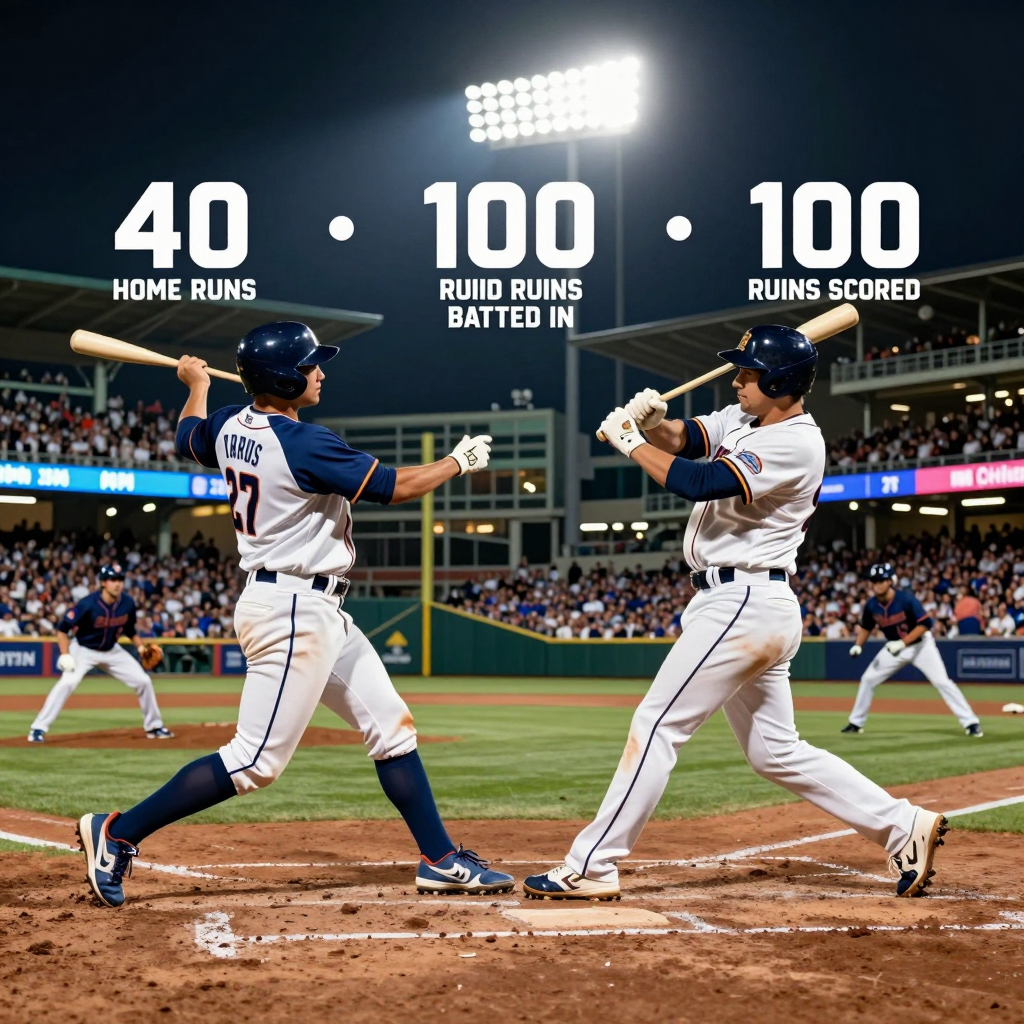
The result was an RBI single to left field. It was more than just a hit that brought a runner home. With that one swing, Kim reached 100 RBIs for the season. Combined with the 40 home runs and 100 runs he had already recorded, he became the youngest player in KBO history to achieve 40 home runs, 100 RBIs, and 100 runs.
What makes this achievement even more special is that it is about more than numbers. With KIA needing to continue its pursuit of third place, the player at the heart of the lineup delivered in the most pressure-filled situation of the game. Completing the milestone against White, who had been called KIA’s “nemesis,” made the story of the game even more compelling.
For KIA fans, Kim Do-yeong’s clutch hit was a moment that confirmed the arrival of a new era. At the same time, it showed that the rivalry among the next generation of stars leading the KBO—alongside Hanwha’s Noh Si-hwan—is beginning in earnest. That one at-bat in Gwangju will be remembered for a long time, not merely as a record, but as something far more significant.
Hanwha vs. KIA: A Rising Rivalry Hotter Than the Standings
The latest matchup between Hanwha and KIA cannot be viewed simply as KIA, sitting fourth, chasing the third-place team. The moment Kim Do-yeong became the youngest player in history to complete a 40-home run, 100-RBI, 100-run season in Gwangju, the significance of the game expanded beyond the standings. For KIA, it became a spark for a second-half resurgence. For Hanwha, it offered even more reason to declare, “We, too, will be the stars of the next era,” with Noh Si-hwan at the center.
Kim Do-yeong has established himself as one of the league’s premier stars, combining explosive power, elite baserunning, and run-producing ability. Even after returning from injury, he never appeared rattled by the pressure of chasing history. His decisive RBI hit that completed the 100-RBI milestone offered a vivid reminder of his presence. As KIA pushes toward the upper ranks, Kim is more than just the heart of the lineup—he has become a symbol capable of lifting the entire team’s spirit.
On the other side stands Noh Si-hwan. Even as Hanwha has fallen somewhat behind in the standings, Noh’s power can change the flow of a game at any moment. For Hanwha’s young core, this is a crucial stage in which the process of growth matters just as much as the results. Facing a strong KIA team and the lineup led by Kim Do-yeong gives Noh and Hanwha’s young players the perfect stage to prove their competitive firepower.
The rivalry between the two players is not yet a fully written story in statistical terms alone. But the moments fans are waiting for are clear:
- The moment Kim Do-yeong delivers the decisive hit that drives KIA’s pursuit
- The moment Noh Si-hwan launches a long ball to signal Hanwha’s counterattack
- The moment both teams refuse to back down, regardless of their position in the standings
The more often these scenes unfold, the more likely Hanwha vs. KIA is to grow beyond a traditional team matchup and become a stage for the next generation of KBO stars. Kim Do-yeong’s historic achievement has given KIA renewed hope, but it has also given Hanwha even more reason to respond with force. That is why this matchup offers a hotter glimpse of the KBO’s future than the current standings ever could.
Hanwha vs. KIA: The Market Favors Hanwha… Can KIA Mount a Comeback?
If we look only at the standings and head-to-head record, KIA clearly has the edge. KIA is chasing third-place LG from fourth, and it also leads Hanwha 9–6 in their head-to-head record this season. Add in the fact that the game will be played at KIA’s home ballpark, Gwangju-Kia Champions Field, and it is only natural for attention to turn toward KIA.
However, the prediction market sees things differently. Major prediction markets have given Hanwha roughly a 56% chance of winning. The result reflects the day’s starting-pitcher matchup and the teams’ specific head-to-head tendencies more heavily than the standings.
Why the Market Rates Hanwha Highly
The key factor is Owen White. White has performed particularly well against KIA and has earned a reputation as their “nemesis.” By contrast, KIA starter Keisho Shirakawa has struggled against Hanwha, going 0–2 with a 5.54 ERA in three appearances.
These numbers serve as more direct game-day indicators than simply asking, “Which team is ranked higher?” In a one-game matchup, especially, a starting pitcher who seizes control early can neutralize the difference in overall team strength. That is also why the market has given Hanwha a narrow edge in this Hanwha–KIA matchup.
- Starting-pitcher matchup: White’s dominance against KIA, and Shirakawa’s struggles against Hanwha
- Early-inning outlook: Hanwha has a strong chance to take an early lead
- Real-time market assessment: Greater weight placed on the day’s pitching matchup than on the standings
Scenarios in Which KIA Can Turn It Around
That said, Hanwha’s victory is far from a certainty. Even if KIA is at a disadvantage in the starting-pitcher battle, it is a team capable of creating a completely different game in the middle and late innings. Its reliable bullpen, deep lineup, and home-field advantage are clear assets.
It is impossible to overlook the fact that Kim Do-yeong has become the centerpiece of KIA’s offense after achieving the remarkable feat of 40 home runs, 100 RBIs, and 100 runs scored. Even if White manages to contain KIA’s lineup early, KIA’s comeback chances will grow the moment his pitch count rises and the game shifts into a bullpen battle.
From KIA’s perspective, Shirakawa does not need to be perfect. If he can avoid giving up a big early inning and survive roughly five innings, KIA will have ample opportunity to change the flow of the game with the strength of its lineup and bullpen.
Hanwha has the starting-pitching edge; KIA has the deeper overall roster.
The collision of these contrasting strengths is the biggest appeal of this matchup.
Reading the Data Beyond the Standings in the 2026 KBO
This game symbolizes the changing way the 2026 KBO is being analyzed. In the past, team standings, recent form, and head-to-head records were the foundation of game predictions. Now, the focus is increasingly expanding to include detailed starting-pitcher matchups, performance against specific pitch types, and collective data from real-time prediction markets.
Hanwha versus KIA is a perfect example of that shift. The market has chosen Hanwha’s starting-pitching advantage, but KIA is ready to overturn that prediction with its home-field edge and overall depth. Hanwha’s narrow statistical advantage—and KIA’s resilience that can come alive during the game. In the end, the result will depend on which team can sustain its strengths for longer.
Comments
Post a Comment