 \n
Labor Day, September 7: Why America Stops and Moves at the Same Time
On Monday, September 7, 2026, the United States will briefly come to a halt. Because Labor Day is a federal holiday, many government offices and local agencies will close, while administrative services will operate on schedules different from usual. In fact, Bethany Beach, Delaware, has announced that its Town Hall will be closed that day.
But “stopping” does not necessarily mean stillness. Some people will prepare family barbecues, others will head to beaches and parks, while many more will remain at work, keeping essential services running even on the holiday. Labor Day is both the long weekend that marks the end of the American summer and a day that clearly reveals how this society views labor—and how sharply local realities can differ from one place to another.
The holiday was originally created to honor workers’ contributions and the value of labor. Rooted in the history of the 19th-century labor movement, it carries the voices of people who demanded better working conditions and a life with dignity. Today, Labor Day is strongly associated with “the last vacation of summer,” but at its core, the holiday still comes down to gratitude for the people who work.
That is why the same September 7 will unfold in entirely different ways across the United States. In Tucson, Arizona, labor unions will meet with the community at an event featuring food, drinks, music, and games. In Chicago, a walking tour through downtown parks is scheduled, while the cooler weather in the Northeast invites people outdoors. By contrast, along the South and Gulf Coast, dangerous heat indexes and the possibility of showers may turn outdoor holiday plans into a matter of safety.
This contrast shows that Labor Day is far more than a red date on the calendar. Public institutions may close, but people will still be working in restaurants, hospitals, delivery services, transportation, and tourism. Because one person’s rest often depends on another person’s labor, the day is both a celebration and a mirror reflecting the realities of work in America.
Labor Day, Two Very Different Weather Stories Across One Country
Even though it is the same Labor Day, Houston is bracing for dangerous heat with a heat index of 109°F (about 43°C). Meanwhile, New Hampshire and Long Island are expecting clear, cool skies in the 70s—perfect weather for barbecues, beach walks, and family gatherings. It is a vivid example of how the American holiday experience can vary dramatically by region.
The South and Gulf Coast: Heat Safety Is Essential—even on an Outdoor Holiday
Labor Day in Houston and across Louisiana will be more than simply hot. Afternoon temperatures are expected to climb into the mid-90s, while high humidity could push the heat index well above 100°F. Some areas may also see afternoon showers, thunderstorms, and localized flooding.
If you are planning a picnic in the park or an outdoor event in the region, safety should come before enjoyment.
- Limit outdoor activities as much as possible during the hottest part of the day
- Drink water frequently and moderate alcohol consumption
- Check in advance for shaded areas and air-conditioned spaces
- Move indoors immediately if you hear thunder or see lightning
Even Labor Day traditions such as barbecues and watching sports require a heat-conscious plan in the South.
The Northeast: Plenty of Sunshine and Lower Humidity
New Hampshire is expected to see clear skies around 75°F, while Long Island should start in the 50s in the morning before warming into the upper 70s during the afternoon. With the oppressive humidity easing, the conditions will be especially well suited for beaches, lakesides, hiking, and outdoor dining.
Even though it is the same Labor Day, the holiday here feels less like an escape from extreme heat and more like a chance to savor summer for as long as possible. Cool mornings that call for a light jacket and warm afternoons exist side by side, highlighting the Northeast’s distinctive seasonal transition.
Why the Difference? America’s Vast Climate Map
The answer lies in the country’s enormous size and its contrasting air patterns. The Gulf Coast is strongly influenced by moist air rising from the warm waters of the Gulf. As a result, high temperatures and humidity can persist into late summer, while afternoon heat buildup often triggers showers and thunderstorms.
New England and Long Island, by contrast, are affected by relatively dry air moving down from the north, along with the Atlantic Ocean. Even in late summer, overnight temperatures can drop and humidity can ease, making sunny daytime conditions feel far more comfortable.
Ultimately, this Labor Day cannot be explained by a single weather pattern. In the South, preparing for extreme heat will be central to travel and event planning. In the Northeast, cool, clear skies will help make the most of summer’s final outdoor moments. Checking the forecast for your destination once more before setting out may be the best way to enjoy this year’s Labor Day.
Labor Day Becomes a Community Celebration—Beyond Barbecue
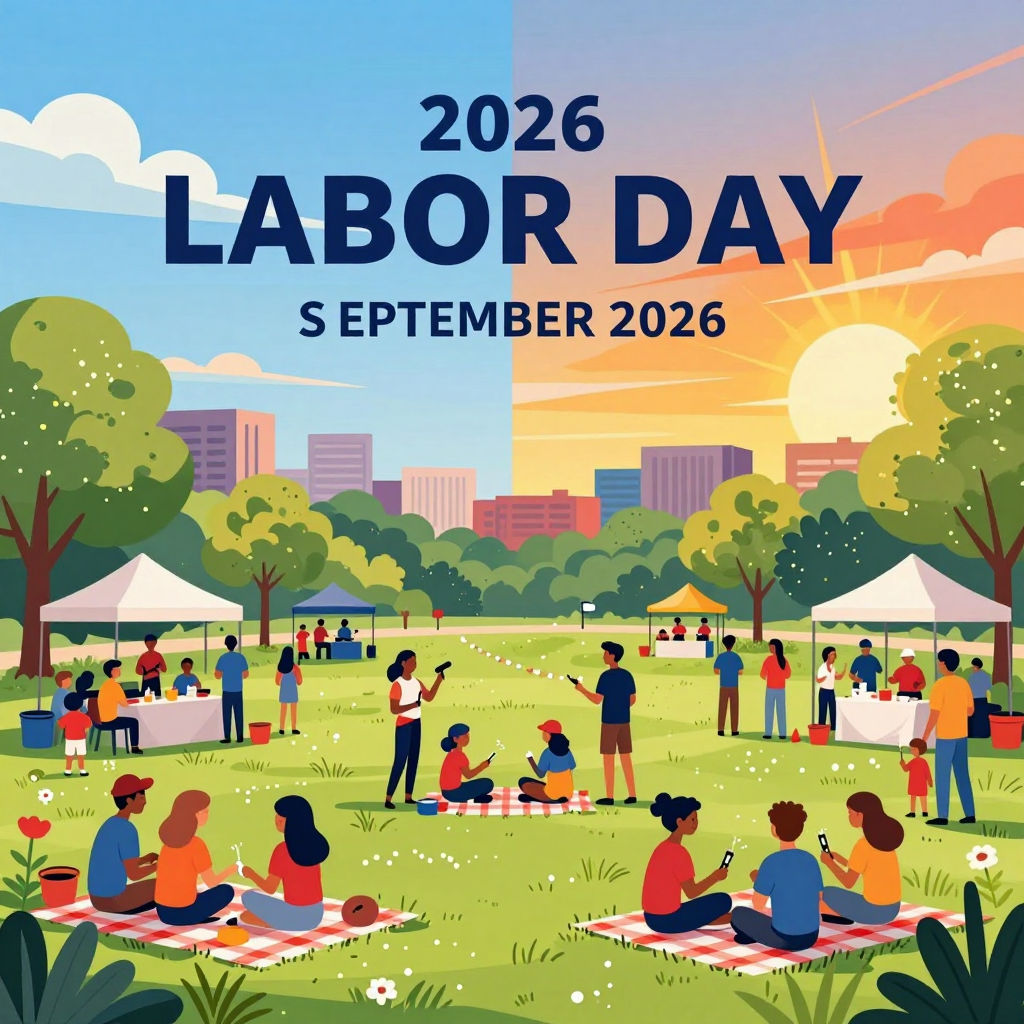
On Labor Day morning, music fills Joaquin Murrieta Park in Tucson, Arizona, instead of the chants of a street march. Free food and drinks are served, children enjoy games, and families and friends gather on the lawn. Hosted by the Pima Area Labor Federation, the “Union by Choice” event offers a glimpse of a new Labor Day—one in which unions take a step closer to the public.
The heart of this change is simple: unions are seeking to move beyond being organizations solely for workers and connect with the everyday life of the wider community. Issues such as wages, job security, and working hours ultimately affect a family’s living expenses, children’s education, and the vitality of local businesses. Sharing a meal and listening to music in the park transforms labor issues—which can sometimes feel difficult or distant—into more approachable conversations.
The festival format, in particular, is significant because it is open to everyone. People do not have to be union members to participate, and residents unfamiliar with the labor movement can visit without feeling pressured. This suggests that Labor Day can become more than a day to commemorate the past—it can serve as a community platform for understanding one another’s work and lives.
Of course, barbecue and music alone cannot solve the problems facing workers. But spaces where people come together connect those who have something to say with those who are ready to listen. If Labor Day is truly a day to honor workers’ contributions, its meaning can come alive not only in slogans from a podium, but also in the meals shared and conversations held in the middle of a park.
The Shadow Behind the Long Labor Day Weekend: Safety Concerns Left in the Wake of Celebration
The Labor Day weekend is a time to savor the end of summer with barbecues, family gatherings, music, and sports. But on the other side of that long weekend—while many are enjoying a break—the city’s safety net is put to the test. In Chicago, preliminary figures recorded 15 shootings, three homicides, and one stabbing since Friday night during the holiday weekend. Seven people were shot in the early hours of Saturday alone, including two teenagers.
These numbers are difficult to dismiss as mere “holiday incidents.” They reveal how the freedom and enjoyment of a holiday can sometimes intersect with urban insecurity, access to firearms, poverty and isolation, and youth violence.
Why Can Long Weekends Bring Greater Risk?
During long weekends, people tend to stay out later in the streets, at event venues, and in party spaces. As family gatherings, meetups with friends, and outdoor activities become more common, so do the points of contact where conflicts can arise. Add alcohol, late-night travel home, and concerns about gaps in public safety across different neighborhoods, and the risk increases that a minor confrontation could escalate into something far more serious.
Of course, the roots of violence cannot be traced to the holiday itself. The underlying problems run much deeper. The illegal circulation of firearms, recurring retaliatory violence, insufficient mental-health support, and a lack of safe recreational spaces and job opportunities for young people all play a role. The incidents of Labor Day weekend are less an isolated holiday phenomenon than a moment when vulnerabilities already present in the city become more visible.
Safety during a holiday cannot be achieved through police presence alone. Communities must also be able to identify conflicts early and build networks that allow young people and families to seek help.
Festivals and Safety Must Be Designed Together
Before a holiday weekend, cities and communities need to increase patrols in crowded areas, review emergency medical response systems, and manage routes home around event venues. But short-term enforcement has its limits. It is essential for community organizations, schools, youth programs, and violence-intervention workers to work together to identify warning signs before they become crises.
If Labor Day is a day to honor the value of work and the contributions of communities, then everyone’s right to rest and celebrate safely must also be part of its meaning. For the final long weekend of summer to remain a good memory for more people, the city needs sustained attention to—and investment in—public safety equal to the energy of the celebrations themselves.
A Question That Leads from Labor Day BBQs to the Dignity of Work
Labor Day is often remembered as a long weekend marking the end of summer. It is a day for enjoying barbecues with family, visiting beaches or parks, and browsing sales. Yet even as some people begin their break, others continue working.
A heat wave with heat indices well above 100°F is forecast for the South and the Gulf Coast. Even on days like these, delivery workers ride across scorching roads, while service workers in restaurants and hotels continue to welcome guests. For airport employees, emergency medical personnel, public transportation workers, and retail staff, Labor Day is not necessarily a day off.
Whose labor, exactly, makes possible the day of rest we enjoy?
This question brings us back to the original meaning of Labor Day. The holiday is not merely the last long weekend of summer; it is a day to honor the contributions and dignity of the workers who keep American society moving.
Workplaces That Never Stop, Even on Holidays
Work today has become more complex. Labor now includes not only people working in fixed offices, but also gig workers receiving assignments through apps, employees logging in remotely, short-term contractors, and essential workers.
The convenience of a holiday, in particular, depends heavily on invisible labor.
- Delivery workers who bring food and goods quickly
- Hotel and tourism workers who assist travelers and visitors
- Retail employees who make holiday shopping possible
- Medical, public safety, and transportation personnel who protect our health and safety
For that reason, working on a holiday cannot be viewed simply as an individual choice. What matters is whether workers are also guaranteed adequate rest, fair wages, safe working conditions, and predictable schedules. This is especially important in environments involving serious health risks, such as outdoor work in extreme heat.
Talking About Workers’ Rights in the Language of Celebration
Labor Day scenes are not always solemn. Events such as “Union by Choice” in Tucson, Arizona, connect residents and labor unions through free food, music, and games. They show how conversations about workers’ rights can move beyond rallies and slogans and expand into celebrations where local communities rest and talk together.
Events like these demonstrate that labor unions are not organizations belonging only to a particular group, but institutions connected to the everyday life of the broader community. Good jobs affect more than individual workers: they shape family life, local economies, consumer safety, and the sustainability of cities.
Labor Day and the Value of Rest
Labor Day 2026 leaves us with important questions amid familiar scenes of heat, travel, and local events. How much do we take labor for granted? Are the safety and rights of those who work on holidays adequately protected? And does our definition of “good work” include not only wages, but also respect and time to rest?
As we prepare a barbecue, set out on a trip, or spend time with family this holiday weekend, it is worth pausing to reflect. The dignity of work does not begin with grand slogans. It begins with everyday standards that allow people to work safely, receive fair compensation, and rest when they need to.
Comments
Post a Comment