 \n
\n
LSU Football: The Coach Returned to Oxford—but He Was No Hero
Lane Kiffin, who once led the resurgence of Ole Miss football, stood inside Vaught–Hemingway Stadium once again. This time, however, he was not the home team’s hero, but the new head coach of rival LSU—a strange position to find himself in.
For No. 7 LSU, this road trip was more than just an SEC opener. Kiffin’s past and present, the emotions of Ole Miss fans, and the challenge facing a team regarded as a playoff contender all collided in a single game. With a nationally televised prime-time slot added to the mix, Oxford became the hottest college football setting of the early season.
But the result was far from the homecoming scenario Kiffin had envisioned. LSU struggled to a 24–7 halftime deficit, and although a second-half rally turned the game back into a contest, the Tigers ultimately fell to Ole Miss, 32–24. The home fans expressed their feelings toward the former coach who had left them through a victory, while Ole Miss transformed the game from a mere battle of ranked teams into a “Night of Revenge.”
The most ironic figure of all was Trinidad Chambliss, who led the Ole Miss offense. The quarterback Kiffin had discovered and developed during his time with Ole Miss threw for 363 yards and two touchdowns. He also added a rushing touchdown that helped determine the game’s momentum, becoming the most painful presence for Kiffin as he now leads LSU.
LSU football showed competitiveness and resilience in the second half. Sam Leavitt created dangerous moments both through the air and on the ground, pulling his team back into the game. But giving away the opening 30 minutes of a big game came at a steep cost. The offense found its rhythm too late, while the defense could not do enough to contain Chambliss’s explosiveness.
In the end, Oxford was not the site of an emotional homecoming for Lane Kiffin, but a stark reality check. LSU remains a talented team, and the season is far from over. But if the Tigers hope to contend for an SEC title and a playoff spot, they must answer with the quality of their next performance—not with stories from the past.
The LSU Football 24–7 Nightmare: What Fell Apart in the First Half
Until kickoff, lsu football had looked every bit like a playoff contender. LSU overwhelmed Clemson 51–10 and dismantled Louisiana Tech 45–14. The offense was explosive, and the start of the Lane Kiffin era appeared to be exceeding expectations.
But prime time in Oxford presented an entirely different test. Against No. 8 Ole Miss, LSU trailed 24–7 at halftime. This was more than a slow start. Ole Miss took control of the game’s rhythm, space, and emotional energy before the break.
The Plan to Stop Chambliss Wasn’t Working
The first thing LSU failed to account for was the expanded playmaking range of Ole Miss quarterback Trinidad Chambliss. Chambliss used the field effectively as a passer, and whenever pressure arrived, he moved to create a rushing threat as well. LSU’s defense could not keep him contained in the pocket, leaving the unit vulnerable both downfield and across the middle.
Chambliss finished the day with 363 passing yards and two passing touchdowns. Those numbers alone make LSU’s defensive struggles clear. But even more important were the moments behind the statistics. Ole Miss seized control on early downs and repeatedly put Chambliss in situations where he could comfortably choose his next play.
LSU gave the opposing quarterback too many options. The pass rush failed to generate finishing pressure at crucial moments, while the coverage allowed Ole Miss receivers far too much room to operate.
The Failure of Kiffin’s “Top Priority”
Lane Kiffin acknowledged in his halftime interview that LSU had failed to execute one central priority. That priority was clear: control the Ole Miss offense, especially Chambliss’ explosiveness.
But in the first half, LSU moved in the exact opposite direction.
- Ole Miss scored 10 points in the first quarter and added 14 more in the second.
- LSU could not slow the tempo of the opposing offense.
- With the defense unable to get off the field, the offense could not establish a steady rhythm either.
- The 24–7 deficit showed that Ole Miss’ execution had outpaced LSU’s tactical preparation.
The situation was especially painful for Kiffin. Chambliss was a quarterback Kiffin discovered and developed during his time at Ole Miss in Division II. The fact that the team coached by Kiffin at LSU could not contain the talent he helped create made the irony of this return matchup even sharper.
The Early Defensive Collapse Cast a Shadow Over the Offense
Although Sam Leavitt and the LSU offense showed signs of a comeback in the second half, they had to chase far too large a deficit after halftime. An offense trailing 24–7 naturally has to play faster and make more aggressive decisions. That can disrupt the balance of the play-calling and place unnecessary pressure on the quarterback as well.
Leavitt eventually pulled LSU back into the game with production through both the air and on the ground. Still, in a road rivalry game against a top SEC opponent, a second-half comeback alone is not enough. If lsu football is going to remain a true contender, it must prove its defense can establish stability early—before relying on offensive explosiveness.
The first half in Oxford did not end LSU’s season. But it was a powerful warning. Against an SEC rival with a high-powered offense, a plan to limit the opposing star quarterback cannot unravel for even a single quarter. The 24–7 deficit was more than a halftime score; it was a very real challenge LSU could no longer afford to overlook in the playoff race.
LSU Football: The Quarterback Kiffin Developed Just Took Kiffin Down
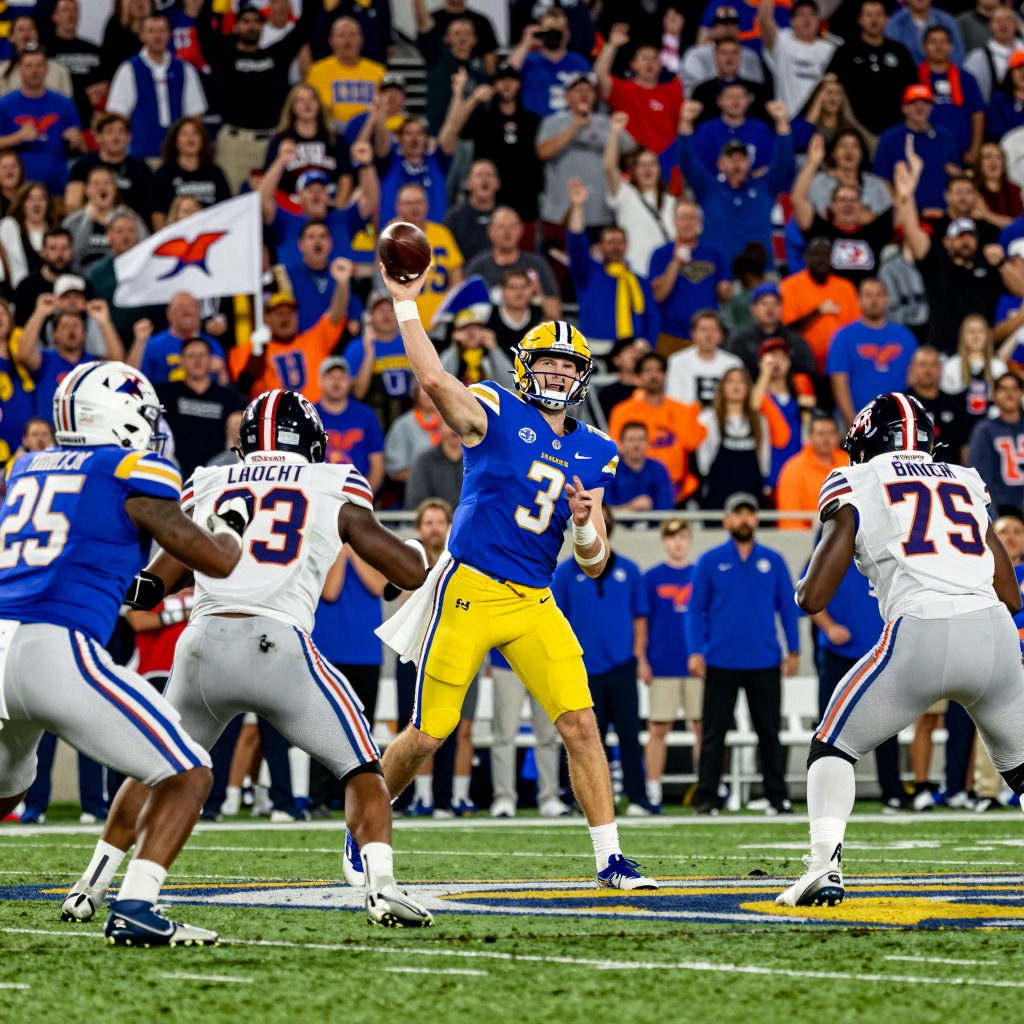
The most ironic moment came late in the game. Trinidad Chambliss, whom Lane Kiffin discovered on the Division II stage and developed into an SEC star, delivered the game-sealing rushing touchdown against LSU—now led by Kiffin himself.
Chambliss finished the day with 363 passing yards and two passing touchdowns against the LSU defense. He was far more than a quarterback who simply piled up passing yards. He consistently escaped pressure, identified openings in the defense, and took off with his legs when necessary, completely directing the Ole Miss offense. Even when LSU began building momentum in the second half, Chambliss stayed composed when it mattered most.
That decisive rushing touchdown sealed Ole Miss’ 32–24 victory. For LSU, it was even more painful because the player they needed to stop was someone they knew all too well. Kiffin understands Chambliss’ talent and development better than anyone. Yet in this game, that knowledge offered no solution.
The quarterback Kiffin discovered and developed brought down Kiffin’s new team.
The moment also proved that Chambliss is more than just a remnant of his former coach’s legacy. He has emerged as Ole Miss’ new offensive icon. His powerful arm, mobility, and clutch ability under pressure in big games are more than enough to place him among the SEC’s top quarterbacks.
For LSU football, meanwhile, a clear warning light is flashing. Sam Leavitt showed promise by leading LSU’s second-half comeback attempt, but the defense ultimately failed to contain Chambliss’ passing and rushing threats. If LSU allows a single opposing quarterback to control an entire game against an elite SEC team, its playoff hopes could become difficult very quickly.
The night in Oxford was a bitter loss for Kiffin—emotionally and tactically. For Ole Miss, it was the night a new star was born.
lsu football, Sam Leavitt’s Counterattack and the Potential LSU Discovered
24–7. It was the kind of scoreline where no one would have been surprised if LSU had completely collapsed in a prime-time road game. But lsu football came back out in the second half looking like an entirely different team. At the center of that turnaround was quarterback Sam Leavitt.
Leavitt led LSU’s comeback with 153 passing yards and one passing touchdown, along with 63 rushing yards and one rushing touchdown. His mobility, in particular, provided a new answer whenever the offense stalled. The moments when he created first downs with his legs as the pocket collapsed, or drew the defense’s attention and opened space for his teammates, showed why LSU values him so highly as a dual-threat quarterback.
LSU completely changed the momentum by pouring in 14 points in the third quarter. A game that had been moving in one direction suddenly became a one-possession battle, and Ole Miss could never feel comfortable for the rest of the night. Although the game ended 32–24, the comeback proved that LSU is not a team that simply disappears against top-tier opponents.
Still, this was not a game that revealed only hope. Leavitt and the LSU offense struggled in the first half against Ole Miss’s pressure and changing coverages. The passing game found its rhythm too late, and the team was left with the task of making faster, more accurate decisions on its opening drives. Against the SEC’s upper-tier defenses, it is difficult to win every week with a quarterback’s escape ability alone.
Ultimately, this loss also represents an important benchmark in Leavitt’s development. He is a playmaker capable of bringing the stadium back to life and the offensive centerpiece LSU can rely on in moments of crisis. If lsu football wants to remain in the playoff race, it must pair Leavitt’s explosive rushing ability with the passing consistency needed to control games from the opening whistle.
LSU Football: The Cold Playoff Reality Created by a 2–1 Record
The moment Ole Miss’ final defensive stand stopped LSU’s last drive, more than the outcome of a single game was decided. LSU football entered a new reality in the 2026 season: 2–1 overall and 0–1 in the SEC.
The 32–24 loss in Oxford did not completely end LSU’s playoff hopes. But LSU is no longer a comfortable Top-10 contender. The Tigers have become a team for which even one additional mistake could prove fatal over the remainder of the SEC schedule.
0–1 in the SEC: A Narrower Margin for Error
An early-season loss in the SEC carries far more weight than one in other conferences. With ranked opponents, NFL-caliber talent, and difficult road environments waiting every week, starting 0–1 immediately shrinks the margin for error.
LSU still has a talented roster and an explosive offense. Sam Leavitt’s mobility offered a clear sign of hope during the second-half comeback attempt. But the Ole Miss game also proved that a strong finish alone is not enough in the playoff race. As the 24–7 halftime deficit showed, falling behind early is not something a team can easily overcome against the SEC’s elite.
The Problem Is Not Just the Loss, but How It Happened
The biggest lesson LSU must take from this defeat is clear: against top-tier quarterbacks and high-powered offenses, the defense must control the game from the opening snap.
Allowing Trinidad Chambliss to throw for 363 yards and two passing touchdowns, while also giving up the decisive rushing touchdown, is difficult to dismiss as nothing more than a one-game lapse. The pass rush, secondary communication, and defensive decisions in clutch situations all need to be reassessed.
LSU under Lane Kiffin has an aggressive identity, but offense alone will not be enough to reach the playoff. Great teams are not simply teams that know how to stage comebacks. They are teams that limit an opponent’s strengths from the start and make the rhythm of the game their own.
What LSU Must Show Now Is a “Response”
The loss in Oxford does not define LSU’s season. But the response that follows could define the entire year. If LSU can build a winning streak and put together complete victories against SEC powers, this loss may ultimately stand as an expensive early warning.
On the other hand, if defensive instability and poor early-game management continue to surface, the Ole Miss game could be remembered as the turning point in the SEC race. The playoff door is not closed yet. But for LSU football, there is now less room for calculation—and far more to prove every week.
Comments
Post a Comment