The Rise, Fall, and Rebirth of the Nike Empire: Analyzing Its 2026 Brand Crisis and Comeback Strategy
 \n
\n
A Warning Bell Rings Across the Nike Empire
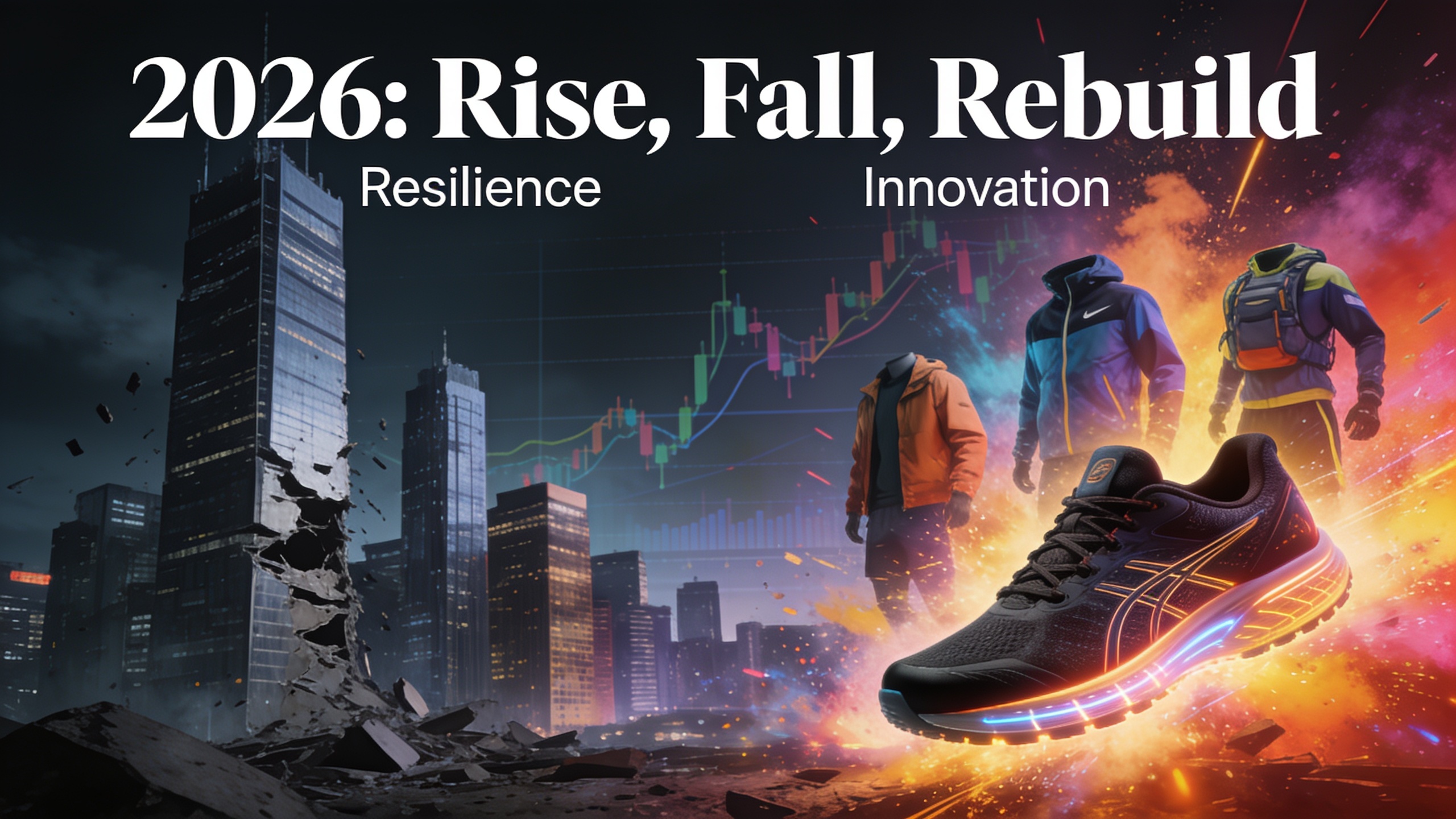
Nike’s market capitalization, once valued at approximately $249.7 billion, has shrunk to around $54.3 billion. It remains a sports brand visible almost everywhere in the world—and a company still generating tens of billions of dollars in annual revenue. So why does the market no longer view Nike with the same level of optimism it once did?
The key issue is not the company’s size, but growing doubts about its future potential and brand heat.
Nike is a corporate giant that has generated approximately $46.4 billion in revenue and $3.1 billion in net income over the past 12 months. This is hardly a situation that can simply be described as “collapse.” Yet the fact that its market capitalization has fallen to roughly one-fifth of its peak suggests that investors are assigning a far more conservative value to Nike’s future.
In particular, the stock’s decline is difficult to explain through performance figures alone. The market is asking questions such as:
- Do consumers still want to buy Nike products at full price?
- Is there a new growth engine beyond Jordan and retro models?
- Is Nike responding effectively enough to the offensive from performance running brands such as HOKA and On?
- Are excessive discounts and bloated inventories damaging the brand’s premium image?
In the past, Nike was a brand that combined scarcity with cultural influence—the kind of brand that made people feel they would miss out if they did not buy now. Limited-edition sneakers and celebrity collaborations became events in their own right, while the resale market served as proof of that feverish demand. But as product supply increased and discounting became more frequent, ordinary product lines began to lose that sense of urgency and exclusivity.
In other words, today’s crisis is not simply about sales volume. More importantly, Nike’s position in consumers’ minds as the “most desirable sports brand” is beginning to shake.
Even so, this shift may represent not an ending, but a turning point. Through streetwear collaborations, authenticated drops, and a renewed focus on ACG and trail running, Nike is working to create a new brand narrative. The decline of such a vast empire is certainly a warning bell—but it may also be the moment of reset Nike needs to sharpen the brand once again.
Nike and the Era of Logos That Won’t Sell—even at a Discount
Repeated discounts across stores and online malls, along with inventory that refuses to shrink, are difficult to dismiss as merely a single season of weak sales. The moment consumers lose “a reason to buy at full price today,” the sense of scarcity and anticipation that Nike has built over the years begins to waver as well.
In the past, the Nike logo was more than a feature of the product—it was a standard by which consumers made their choices. Waiting for new releases, entering limited-edition draws, and even checking the resale prices of popular models all became part of the brand experience. Recently, however, general-release products have been moving into discount territory quickly, changing the formula consumers use to decide when to buy.
“If I wait just a little longer, I can get it cheaper.”
Once this perception takes hold, selling at full price becomes difficult. Discounts may reduce inventory in the short term, but over time, they can diminish the perceived value of a product. This is especially true in general product lines with an excessive number of colorways and large production volumes. As scarcity disappears, consumers begin waiting for the next discount instead of buying the new release.
The Inventory Problem Is About ‘Anticipation,’ Not Supply
Nike’s inventory issue does not simply mean that too many products have been manufactured. The more fundamental problem is that consumers no longer feel enough novelty or symbolism in new releases.
- Similar designs and repeatedly recycled colorways
- Frequent promotions and rapid shifts to discount pricing
- Broad distribution that makes products easy to find anywhere
- A widening value gap between premium collaborative products and general releases
When these factors overlap, the power that once drove purchases through the logo alone begins to weaken. If “sold out” once proved the heat surrounding the brand, “discount percentage” has now moved to the center of the consumer’s decision-making process.
What Nike Needs to Rebuild Is Not Its Price, but Its Reason
Discounts can encourage purchases, but they cannot make a brand hot again. What Nike needs is not a deeper markdown, but a reason compelling enough for consumers to feel that paying full price is worthwhile.
That reason could be product performance or truly distinctive design. Collaborations connected to local culture, authentication that builds trust, and functionality proven in real-world running and trail environments could also provide important answers.
Ultimately, Nike’s challenge is clear. It must maintain the scale of a brand that anyone can buy from, while breaking free from the perception that it is a brand that can be bought at any time. Inventory piled up on discount racks may be more than a sales problem—it may be a warning from the brand experience itself, signaling that Nike has failed to turn consumers’ waiting into a reason to buy.
Nike’s Experiment to Reclaim Trust Beyond the Hype
There was once a clear reason to buy Nike products: the iconic logo, the scarcity of limited editions, and the fervor of the resale market. But now that discounted products and excess inventory are on the rise, consumers are asking a more demanding question: “What is the compelling reason to buy this product now, at full price?”
Nike’s answer in its collaboration with Harlem’s Wagyu is not simply another logo-driven play. It is a drop that combines premium streetwear, a cultural narrative, and authentication.
New Scarcity Built on Local Stories
The Harlem’s Wagyu collaboration centers on an apparel collection and the Air Max 90 x Wagyu Black & Anthracite. What matters is not just the design of the products themselves. It is the way the neighborhood of Harlem and the cultural identity of its partner have been woven into the story behind them.
The more global megabrands supply the same products at scale across every market, the more familiar consumers may find them—but at the same time, the less special those products can feel. By contrast, collaborations shaped by local culture and a creator’s perspective give products a deeper context.
The value of a limited edition is no longer determined by “quantity” alone.
Who made it, what story it tells, and why it was released now have all become equally important.
An Era When Proof of Authenticity Becomes the Brand Experience
One expression worth noting in this collaboration is Authenticated Releases—a release format that places product authentication front and center. As the resale market has grown, so too has the problem of counterfeits. Buyers now want not only compelling design, but also trust throughout the purchasing process.
Authentication goes beyond simply preventing counterfeits. For consumers, it provides the assurance needed to own a product with confidence. For brands, it becomes a tool for managing a product’s origin and value. Particularly in premium-priced sneakers and streetwear, the experience of being able to verify that a product is “the real thing” can itself influence the decision to buy.
What Nike Needs to Rebuild Is a “Reason to Wait”
Nike’s challenge is not to make every product scarce. Broad distribution and mass accessibility remain among the brand’s greatest strengths. However, its products need clearer roles: core offerings should strengthen their appeal through function and price, while energy-driven collections should deliver unmistakable stories and trust.
The Harlem’s Wagyu collaboration is a small experiment pointing in that direction. The era when hype alone could move consumers is over. What Nike needs to restore is not mere buzz, but a distinctive reason that makes consumers willing to wait for, own, and trust its products.
Nike’s Strategy to Return to Sport
Streetwear and retro sneakers have long been among Nike’s most powerful weapons. But with oversupply and repeated discounting, simply releasing “good-looking shoes” is no longer enough to spark consumers’ desire to buy. Now, Nike is turning its attention away from the polished streets of the city—and toward rough, unpredictable trails.
The Message Behind ACG: The Field Over Fashion
Nike ACG (All Conditions Gear) is, true to its name, a line designed for every environment. Its recent focus on trail running communication suggests that Nike is once again putting the essence of its products—athletic performance and real-world use—front and center.
In particular, the message of the “unpredictable trail” is more than a simple advertising slogan. It reflects an approach that seeks to address the challenges real runners face—slippery terrain, sudden changes in weather, and fatigue over long distances—through both products and storytelling. It is a strategy aimed at breaking through the brand fatigue built up in the lifestyle market with functionality and trust.
A Fresh Challenge in the Performance Running Market
The running market is no longer Nike’s alone. Performance-focused brands such as HOKA and On have rapidly strengthened their presence by emphasizing cushioning, lightweight construction, and trail functionality. The reason Nike is doubling down on ACG and trail running is clear: it needs to prove its competitiveness once again in the sports category where the brand’s roots lie.
Trail running is an especially important category. Runners assess shoes more rigorously for grip, durability, comfort, and protection than for design. In other words, success in this market could serve as proof that Nike is still more than “a brand with a cool logo”—that it is a brand that truly understands sport.
Retro Popularity Alone Is Not Enough
Jordan and retro basketball shoes remain powerful assets for Nike. But it is difficult to rebuild the growth story of an entire brand through past symbolism and limited-edition hype alone. Consumers now ask not only how scarce a product is, but also what tangible value it brings to their workouts and everyday lives.
That is why ACG and trail running are more than simple expansions into a new line. They represent a reframing—an effort by Nike to move away from buzz driven by fashion, collecting, and resale, and bring function, experience, and athleticism back to the center of the brand.
If Nike can earn trust once again on rugged mountain trails, it may be able to reclaim not only its identity as a performance sports brand, but also move beyond its image as merely a streetwear brand.
Nike’s Next Chapter: Why Jordan Alone Isn’t Enough
The sellout success of the Air Jordan 11, the enduring popularity of retro basketball shoes, and Nike’s broad kids’ running lineup remain powerful assets supporting the brand. Jordan is more than a basketball shoe—it is a symbol where sports, fashion, and collecting culture converge. Its retro line instantly transforms the brand’s long history into commercially viable value.
But the problem is clear. Products that succeeded in the past may defend current sales and attention, but they cannot restore declining expectations of the brand. Consumers no longer decide to pay full price based solely on familiar silhouettes and logos. As general-release products become increasingly tied to discounting and inventory cycles, Nike’s dependence on Jordan and a handful of popular models can only grow.
A Powerful Cash Cow, but a Limited Growth Story
Nike’s retro basketball shoes and Jordan line still possess the strengths of scarcity, symbolism, and fandom. Kids’ running also remains a stable category, connecting family-oriented spending with a growing market. Yet these pillars are, at their core, closer to proven formulas for success than to new engines of growth.
To open its next chapter, the brand must answer the following questions:
- Can general-release products—not just limited editions—become products consumers are willing to wait for?
- Can Nike regain trust through performance in running and trail?
- In a market increasingly fatigued by counterfeits and resale culture, can product authentication become a new kind of buying experience?
- Can Nike redesign the balance between global mass appeal and exclusivity?
Turning Scarcity, Performance, and Trust into One Experience
The key to a comeback does not lie solely in selling more Jordans. Nike must preserve the cultural power of its retro products while proving real performance through ACG and trail running, and restoring local relevance and creativity in its streetwear collaborations.
Add an authentication-based drop experience, and the story changes. Consumers are no longer simply buying a product. They are also buying the product’s guaranteed authenticity, provenance, story, and community experience. This could be a way to restore the perceived value weakened by discount-driven competition.
Ultimately, Nike’s next chapter will not begin by repeating the icons of its past. It will depend on connecting Jordan’s legacy with scarcity, performance, authentication, and digital experiences to once again create “a reason to buy this product right now.”
Comments
Post a Comment