What the 800 Billion Won Forged Cashier’s Check Case Reveals About How Checks Work—and the Risks They Carry
 \n
\n
The Day Four Cashier’s Checks Worth 200 Billion Won Each Appeared at a Bank Counter
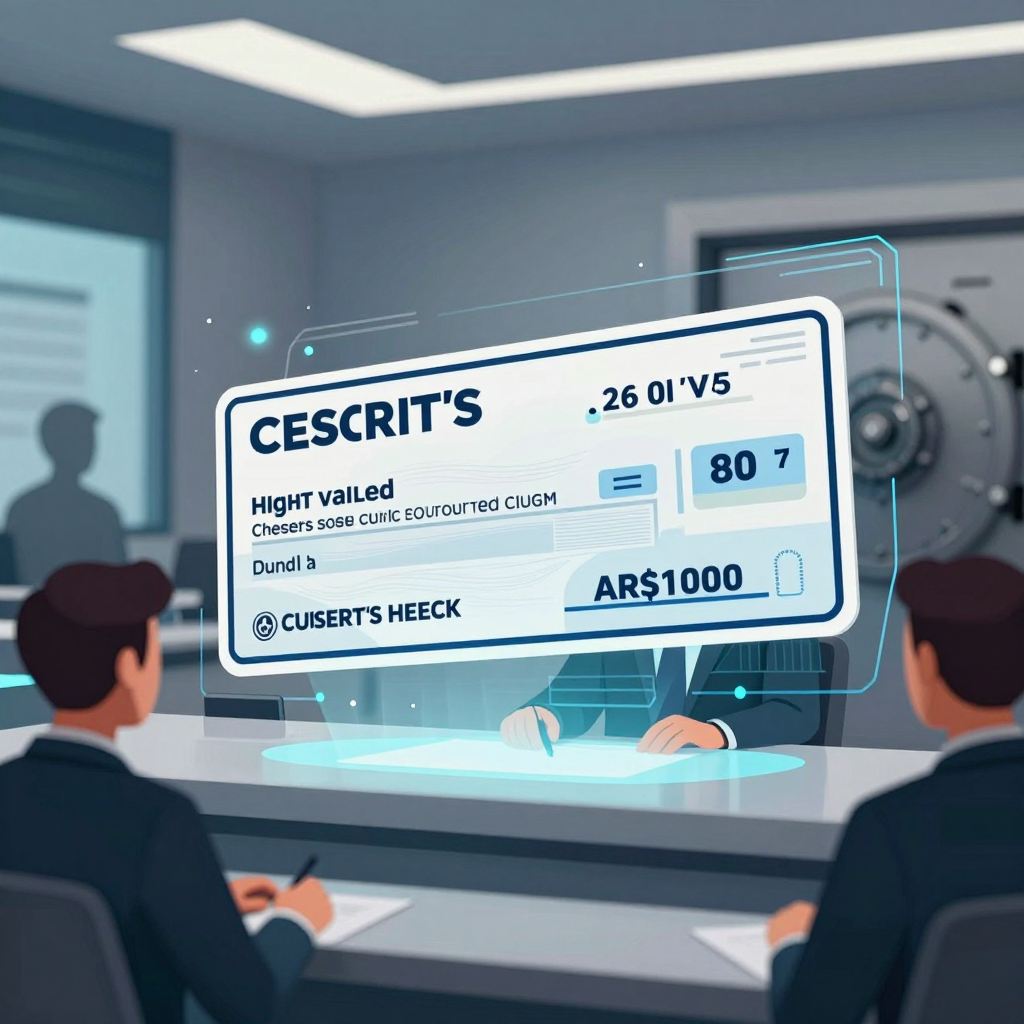
A man approached a bank counter and presented four cashier’s checks worth 200 billion won each. The total amount was an astonishing 800 billion won. He asked the bank to deposit the checks into his account.
Instead of accepting the checks, however, the teller immediately began the verification process. Not long afterward, the police were notified. Why?
The biggest reason was the amount involved. A cashier’s check is issued directly by a bank, which guarantees payment. But in ordinary domestic transactions, checks worth hundreds of billions of won are virtually unheard of. When four checks worth 200 billion won each are presented at once, verifying the scale of the transaction and the source of the funds is an obvious and necessary step.
The teller used the bank’s system to check whether the checks had actually been issued, along with their serial numbers, amounts, and dates of issuance. If they were legitimate cashier’s checks, the relevant information should have appeared in the bank’s system. But these checks did not match any valid issuance records. That was not simply a minor error—it was a decisive warning sign that the checks could be forged.
Eventually, the police arrived at the scene, and the man who presented the checks was reportedly arrested on suspicion of attempting to use forged securities. Even if someone did not personally create the forged checks, depositing them or requesting payment while pretending they are genuine can constitute a serious crime.
What stands out in this case is not just the figure of “800 billion won.” It is that the bank employee followed three basic principles: questioning an abnormally large amount, checking the bank’s system, and reporting the matter immediately. If the check amounts had been more realistic or the verification process had been less thorough, the potential damage could have been far greater.
Cashier’s checks are a means of payment built on the high level of trust placed in a bank’s guarantee. But that very trust is why anyone receiving a check must still verify whether it was genuinely issued and whether it is authentic. The larger the check, the more important it is to ask not, “It was issued by a bank, so it must be fine,” but rather, “Was this really issued by the bank?”
What “the Bank Guarantees It” Really Means for a Cashier’s Check
A cashier’s check is fundamentally different from an ordinary check issued by an individual. It is not simply a piece of paper accepted on the basis of an individual’s account balance or creditworthiness. It is a payment instrument issued directly by a bank, with the bank itself assuming responsibility for payment. That is why cashier’s checks have long been treated as nearly equivalent to cash in situations involving large sums of money, such as the final payment for real estate or a security deposit.
The Bank Secures the Funds the Moment It Issues the Check
To obtain a cashier’s check, the customer must first provide the bank with funds equal to the check’s amount. After securing those funds, the bank issues the check in its own name.
In other words, the person receiving the check is relying not on the individual handing it over, but on the issuing bank’s ability and responsibility to make the payment. This is a fundamentally different trust structure from an individual simply promising, “I’ll pay you later.”
A cashier’s check is not a certificate of the customer’s promise—it is a document embodying the bank’s promise to pay.
The Structure Is Embedded in the Name “Cashier’s Check”
The term “cashier’s check” comes from the structure in which the bank effectively makes itself the party responsible for payment. Generally, a check is an instruction from the issuer directing a financial institution to make a payment. A cashier’s check, however, is issued by the bank, which also assumes responsibility for paying it.
For this reason, a properly issued cashier’s check should be verifiable through the bank’s internal system, including its issuance status, serial number, amount, and issue date. In recent high-value counterfeit-check cases, the fact that the checks could not be found in the bank’s system was a decisive warning sign.
It Has Been Treated Like Cash—but It Is Not Exactly the Same as Cash
A cashier’s check reduces the burden of carrying large amounts of physical cash. While it cannot eliminate the risk of loss entirely, it is more convenient than transporting bundles of cash, both in terms of handling and documenting the transaction.
However, you should never automatically trust a check in front of you simply because “the bank guarantees it.” Counterfeit checks can be difficult to identify by appearance alone. In particular, if the face value is excessively large compared with the size of the transaction, or if someone you are dealing with for the first time insists on paying only by cashier’s check, you should confirm the issuing bank and have the check authenticated at a bank counter.
Legal Reliability Depends on It Being Properly Issued
A cashier’s check is legally considered a negotiable security. Accordingly, a lawfully issued check can be presented for payment according to the prescribed procedures and serves as important evidence of payment in a transaction.
By contrast, depositing or attempting to receive payment for a counterfeit cashier’s check can lead to serious criminal consequences, rather than being treated as a simple mistake. Remember that a bank’s guarantee does not automatically attach to every piece of paper that looks like a check. It applies only to a genuine check actually issued by the bank.
Why Cashier’s Checks, Trusted So Highly, Become Targets for Crime
The greatest advantage of a cashier’s check is clear: it is issued by a bank, not an individual, and the bank assumes responsibility for payment. From the other party’s perspective, there is no need to count cash by hand, and a large amount of money can be transferred safely in the form of a single certificate.
But that very trust is what makes cashier’s checks attractive targets for criminals. If a check appears to be a legitimate one guaranteed by a bank, the recipient may be more likely to let down their guard within a short period of time.
Forgers Exploiting the Name of a Bank Guarantee
What forgers are targeting is not the paper itself, but the bank’s credibility attached to the check. With an ordinary IOU or a check issued by an individual, the other party must assess the issuer’s creditworthiness. By contrast, cashier’s checks strongly evoke the belief that “the bank will pay,” which can lower people’s level of caution.
This is especially true in high-value transactions involving real estate balances, business payments, or security deposits. In such situations, a single check may be treated as the equivalent of hundreds of millions of won—or even more—in cash. Criminals can exploit this environment by handing over a forged check and persuading the other party to transfer goods, rights, or cash before verifying its authenticity.
The recent case involving a forged cashier’s check worth KRW 800 billion follows the same pattern. Its face value was so enormous that it immediately aroused suspicion at a bank counter. However, if the check had been forged for a more realistic amount, an ordinary transaction partner might have been more easily misled.
Why It Is Difficult for Ordinary People to Tell the Real from the Fake
Checks contain various security features, including security printing, serial numbers, and issuance details. However, it is not easy for ordinary people to identify these elements accurately. If the printing is sophisticated and even the document format looks convincing, it can be difficult to determine authenticity with the naked eye alone.
Judgment can become even more clouded in situations such as the following:
- The transaction is moving quickly, leaving little time for verification
- The other party is already trusted, such as through a real estate agent or a personal introduction
- The check amount appears, at first glance, to match the scale of the transaction
- The other party reassures you by saying, “It’s a bank-issued check, so there’s no problem”
Ultimately, more important than the check’s appearance is confirming through the bank’s internal system whether it was actually issued. A check should never be judged legitimate based solely on the color of the paper or the quality of its printing.
If You Receive a Check, Make ‘Verify Before Proceeding’ the Rule
If you are receiving a high-value cashier’s check, the safest approach is to take it to the issuing bank or a nearby bank branch. Ask a teller to verify the check’s authenticity and issuance details. The verification process will be conducted based on information such as the serial number, amount, and date of issue.
In particular, it is wise not to rush into a transaction if you notice any of the following signs:
- The check amount is excessively large compared with the scale of the transaction
- Several high-value checks are presented all at once
- The explanation of how the check was issued or where the funds came from is vague
- The other party is reluctant to have the check verified by a bank or to accompany you to the counter
A cashier’s check is a highly trusted means of payment, but a check accepted without verification can become a risk rather than a guarantee. The higher the value of the transaction, the more important it is to prioritize “confirming the check’s authenticity at the bank” over simply “receiving the check.”
Why Cashier’s Checks Have Not Disappeared Even in the Age of Digital Finance
Now that bank transfers and mobile payments have become part of everyday life, paper checks may seem destined to disappear. In reality, most routine personal transactions and corporate payments have shifted to fast and convenient electronic financial services. Even so, cashier’s checks have not completely vanished.
The reason is simple. In certain transactions, the certainty provided by a physical payment instrument whose payment is guaranteed by a bank matters more than a “quick transfer.”
In High-Value Transactions, Certainty Matters More Than Speed
In transactions involving the movement of a large sum of money at once—such as the final payment for a real estate purchase—the fact that the money has been transferred, whether the funds are ready, and whether payment is guaranteed are all important. A cashier’s check provides the counterparty with a level of confidence close to that of cash because the bank secures the funds when issuing the check and assumes responsibility for payment.
A cashier’s check may be used especially when the parties meet in person to settle the balance, for the following reasons:
- It reduces the burden of transporting a large amount of cash.
- It offers greater payment reliability than a check issued by an ordinary individual.
- It is relatively easy to leave evidence that the payment instrument was personally verified and handed over.
- It helps reduce variables such as incorrect account information or transfer limits.
Of course, bank transfers have also become common in real estate transactions. However, cashier’s checks remain an option when one of the parties prefers tangible proof of payment or when transaction practices require a bank-guaranteed instrument.
Areas Where Trust Is Essential, Such as Court Deposits and Bid Bonds
Another reason cashier’s checks remain in use is that there are areas—such as court deposits, bid bonds, and various security deposits—where the ability to pay and the certainty of the funds are critical.
In these transactions, the key issue is not simply whether someone “made a transfer,” but whether the full amount has been reliably prepared and payment is guaranteed. A cashier’s check issued by a bank continues to play a role because its issuer is clearly identified and its authenticity can be verified through formal procedures.
The “Transaction Psychology” Digital Payments Cannot Replace
Electronic transfers are convenient, but not everyone feels fully reassured by digital methods alone. In high-value transactions in particular, the following concern often comes into play:
“Can I confirm, right here and now, that the money is actually ready?”
A cashier’s check may be just a sheet of paper, but it carries the bank’s responsibility to make the payment. That is why it still has meaning when it is difficult to rely entirely on the counterparty’s creditworthiness or when clear proof of payment is needed in an in-person transaction.
However, Never Accept One Based on “Trust” Alone
The fact that a cashier’s check is a bank-guaranteed payment instrument does not mean it should be considered safe the moment it is handed over. Documents that look convincing on the surface can still be misused, as seen in recent counterfeit-check cases.
If you receive a high-value cashier’s check, it is advisable to verify the following:
- Check the issuing bank, date of issue, and serial number.
- Make sure the check amount is reasonably consistent with the size of the transaction.
- If possible, request verification of its authenticity from the issuing bank or at a bank branch.
- Before verification, do not rush to hand over goods, transfer ownership, or make additional payments.
Digital finance will continue to develop at an even faster pace. However, cashier’s checks are more than a simple paper-based payment method. As a trust mechanism needed for high-value, face-to-face, and guarantee-centered transactions, they are likely to remain in use for some time.
What You Must Check the Moment You Receive a Cashier’s Check
Just because you have a check in front of you does not mean you should deposit it immediately or hand over the goods. Especially in high-value transactions, there may be a difference between a deposit request and the actual confirmation that the funds are secured. The value of a cashier’s check lies not in the paper itself, but in the trust that comes from the bank’s system confirming that it was validly issued.
First, Make Sure the Transaction and Amount Match
The first thing to check is the check’s face value. If the amount is excessively large compared with the transaction, or does not match the amount stated in the contract or quotation, it is safer to pause the deal immediately.
Be particularly cautious in the following situations:
- The check amount is unusually large for an ordinary private transaction
- Several checks are presented at once
- The other party pressures you to deposit it first, saying, “It’s urgent”
- Their explanation of the check amount and source of funds is inconsistent
A large amount alone does not prove that the check is counterfeit. However, you must carefully consider whether the circumstances of the transaction and the check amount are naturally connected.
Check the Issuance Details and Serial Number
When you receive a cashier’s check, carefully inspect basic information such as the issuing bank, issue date, face value, and serial number. Do not assume a check is genuine simply because it is neatly printed or bears the name of a bank.
The following details should be checked:
- The issuing bank and branch
- The date the check was issued
- The face value
- The serial number
- Any visible signs of damage, alteration, smudging, or other irregularities
The safest approach is to contact the issuing bank or visit a nearby branch in person to confirm whether a cashier’s check with that serial number was actually issued. If you feel that a phone confirmation is not enough—or if the transaction involves a large amount—you should have the physical check verified at a bank counter.
Have It Verified at a Bank Counter, Not Through an ATM
Rather than processing the check through an ATM or mobile banking immediately after receiving it, ask a bank employee to verify its authenticity at a branch counter. The bank can use its internal system to look up the issuance records and check details.
At the counter, make your request clear:
“Please verify first whether this cashier’s check was properly issued and whether it is genuine.”
If the check was officially issued, details such as the serial number, amount, and issue date should generally match the bank’s electronic records. If the check cannot be found in the system or the information does not match, stop the transaction immediately. Do not hand over the goods, contract, or documents related to ownership to the other party.
Distinguish Between a Completed Deposit and Confirmed Funds
The fact that a deposit has been accepted into your account does not mean that every risk has disappeared. If an irregularity is discovered during the check-processing procedure, the deposit may be canceled or the funds may be returned. Therefore, in transactions that are difficult to reverse—such as a final payment for real estate, vehicle delivery, or the sale of high-value goods—you should never conclude the deal based solely on a deposit confirmation screen.
Whenever possible, follow these principles:
- Proceed with the transaction only after the bank has completed its authenticity check
- Confirm with the bank that the funds have actually been secured
- For high-value transactions, keep the contract, receipt, and deposit confirmation documents together
- If anything seems suspicious, do not make the decision alone; consult a bank employee or the police
Ultimately, a cashier’s check is a “payment instrument guaranteed by a bank,” but that guarantee has meaning only when the check has been confirmed to have been validly issued. It may be slightly inconvenient, but making verification a habit is the most practical way to protect yourself from counterfeit-check fraud.
Comments
Post a Comment