Can Waste Really Make Money? A Complete Guide to 2024’s Biggest Waste Trends, from the Circular Economy to AI E-Waste
 \n
\n
Waste: The Real Story Begins After the Bin Is Emptied
The moment we throw something into a trash bin, it is easy to assume that the object’s story has come to an end. In reality, the opposite is true. Once discarded, waste embarks on a far more complex journey.
In South Korea, approximately 23.76 million tons of municipal waste were generated in 2024. That amounts to about 1.23 kilograms per person per day. Awareness of the need to “throw away less” is spreading, but urban consumption, delivery services, and ever-shorter product replacement cycles continue to drive waste volumes upward.
So, is what we throw away really useless garbage?
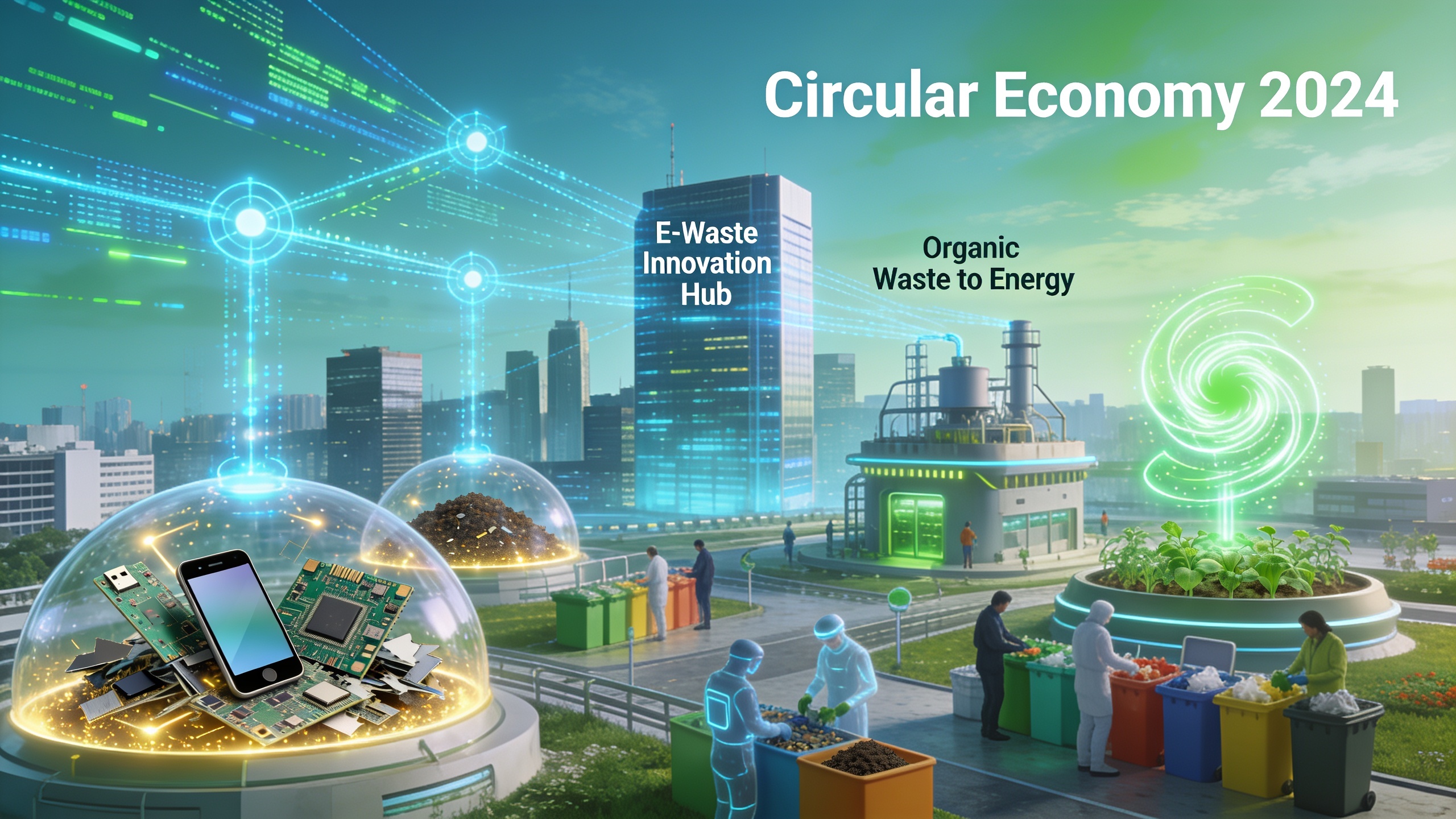
After collection, sorting, and recycling, discarded materials can return in entirely new forms. Some municipal waste undergoes shredding and sorting to become refuse-derived fuel (RDF), which is then used as an energy source in places such as cement factories. Polystyrene foam, once considered a major nuisance, can be compressed and molded into construction materials or used as a raw material for lightweight concrete.
Smartphones are no exception. A used mobile phone is not simply electronic waste. After being safely shredded and processed through smelting, valuable metals such as gold, silver, copper, and palladium can be recovered. In other words, a tiny mine is hidden inside every discarded device. This is what we call urban mining.
Of course, not all waste becomes a resource. Improperly sorted plastics, contaminated recyclables, and electronic devices that slip outside official collection systems may ultimately be incinerated or landfilled—or handled through informal processes that place a burden on both people and the environment. The value of waste depends less on the object itself than on how it is discarded and how it is recovered.
The trash bin is no longer an ending, but a starting point. A single bag of waste may end up in a landfill—or return to us as new fuel, materials, and valuable resources. Ultimately, the first step toward a circular resource system does not begin with some grand technological breakthrough. It begins with the small choice we make today: what we throw away, and how we throw it away.
A Second Life for Waste: The Front Lines of the Circular Economy
Once, waste was seen as nothing more than a burden that generated disposal costs. But things are different now. Food waste is transformed into energy, Styrofoam into construction materials, and old mobile phones into urban mines rich in gold and silver. What is emerging is not the end of discarded items, but the starting point of new industries.
Food Waste: Becoming Energy Instead of Being Thrown Away
South Korea’s food waste recycling rate is known to be around 97%. Food waste separately collected from households and restaurants does not simply disappear into treatment facilities. It is used as a raw material for animal feed and compost, or converted into an energy source through biogas production.
This system is also attracting attention from cities overseas. New York, in particular, is strengthening its organic waste management system by referring to South Korea’s methods of separating and recycling food waste. It is a clear example of how accurate waste separation can translate into a city’s energy and resource competitiveness.
A single bag placed in a food waste bin could one day become part of the electricity and fuel we use.
Waste Styrofoam: Lightweight, Yet Valuable Raw Material
Bulky and difficult to process, waste Styrofoam is also an important target for resource circulation. Haenam County has drawn attention for recycling approximately 284 tons of waste Styrofoam. The collected Styrofoam was compressed and molded using a volume-reduction machine, then used in construction materials, picture frames, lightweight concrete, and other products.
The key is simple: efficiently compress bulky waste and create stable markets for recycled materials. This case is significant because it shows that even small, local-scale processing infrastructure can produce meaningful results in the circular economy.
Discarded Mobile Phones: Turning into Urban Mines
Old mobile phones sleeping in drawers may be small, but they are densely packed sources of valuable resources. They contain metals such as gold, silver, copper, and palladium, all of which have significant recovery value. When sent through official collection systems, the phones can have their personal data securely destroyed, then undergo shredding, grinding, and smelting to extract valuable metals.
This process is also connected to the Extended Producer Responsibility (EPR) system. By requiring manufacturers and importers to take responsibility for collection and recycling even after their products are discarded, EPR manages products throughout their entire life cycle.
Throwing away a mobile phone is not simply a matter of tidying up. It is a practical act of resource recovery that reduces dependence on imported raw materials and lessens the environmental burden created by mining.
Waste Is Not a Cost, but Material for Circulation
Municipal waste can be sorted and processed into refuse-derived fuel (RDF), which may then be used as an energy source in cement plants and other facilities. A process that once ended in landfilling or incineration is now extending into the fuel and materials markets.
Of course, not all waste can be recycled. Contaminated recyclables, improperly mixed waste, and unstable markets for recycled materials remain challenges that must be addressed. But the direction is clear. The more accurately waste is separated and the more reliably it is collected, the more resources can return to the economy.
The circular economy cannot be completed through grand technologies alone. When household waste separation, corporate recycling-oriented product design, and local government collection infrastructure work together, discarded items can finally begin their second lives.
E-Waste in the Age of AI: The Electronic Waste Piling Up Behind Data Centers
The smarter AI becomes, the more rapidly the equipment supporting it is replaced. High-performance GPUs, AI servers, storage systems, and network infrastructure generate enormous amounts of heat and consume vast quantities of power as they handle massive computational workloads. They also become obsolete at an increasingly rapid pace. Behind the dazzling innovation of data centers, vast quantities of electronic waste are ultimately left behind.
The amount of e-waste generated worldwide currently stands at approximately 68.3 million tons per year. Yet less than one-quarter enters official collection and recycling systems. The rest may be stored or diverted into opaque distribution and disposal channels.
The advancement of digital technology is also accelerating an invisible waste problem.
Some projections suggest that global e-waste generation could reach as much as 211 million tons annually by 2050. AI-related equipment may account for 15–20% of that total. As competition in AI intensifies, companies are compelled to adopt faster chips and higher-performance servers, and even equipment that is still operational may be replaced prematurely for economic reasons.
The problem is that e-waste is not simply scrap metal. Servers, GPUs, batteries, and circuit boards contain valuable metals such as copper, gold, silver, and palladium. At the same time, they may also contain substances—including lead and chromium—that can be harmful to human health and the environment. Recovered properly, they can become an urban mine. Handled improperly, however, they can lead to soil, air, and water pollution.
Informal processing outside official recycling networks raises both labor and environmental concerns. Dismantling or burning electronic devices without protective equipment threatens workers’ health and can shift the burden of pollution onto regions with weaker regulations and vulnerable communities. The benefits of digital innovation are enjoyed around the world—but the question of who bears the risks of its waste is precisely why this issue demands attention.
What the AI era needs is not simply more servers. From the moment equipment is purchased, companies must consider repairability, component reuse, take-back systems, and recycling-oriented design. Data center operating policies also need to incorporate equipment replacement cycles and principles for handling e-waste.
The future of AI cannot be judged by computing power alone. Only when the waste left behind at the end of technology’s life is managed responsibly can we truly call it sustainable digital innovation.
Waste and Environmental Justice: Who Throws It Away, and Who Bears the Burden?
A case in which more than 1,100 tons of household waste generated in the Seoul metropolitan area was transported to Gangwon State for treatment leaves us with an important question. The waste may have disappeared from where it was produced, but the odors, increased traffic, concerns about air pollution, and the burden of hosting treatment facilities may all have been passed on to another region.
Waste treatment facilities are essential to the operation of any city. The issue is not whether these facilities are necessary, but how fairly their burdens are distributed—and among whom.
The Movement of Waste Can Become the Movement of Burdens
Regions with concentrated populations and consumption, such as the Seoul metropolitan area, generate large amounts of waste. Yet landfills, incinerators, sorting centers, and recycling facilities are generally located on the outskirts of cities or in other regions. Transported waste may be converted into fuel and used at cement plants, but the environmental and social burdens created during the treatment process do not simply disappear.
When this pattern is repeated, metropolitan areas may enjoy the benefits of consumption while particular communities bear the risks and inconveniences of waste treatment. That is why the waste issue is not merely a matter of treatment technology or administrative efficiency—it is also a question of how responsibility is shared among regions.
“Treatment facilities are needed somewhere” is entirely different from saying, “The same communities must always bear the burden.”
Environmental Justice Issues Created by Facility Concentration
As seen in debates over the proposed revival of the Saenggok Incinerator in Gangseo-gu, Busan, it is only natural for residents to strongly oppose the construction of additional facilities in areas that already host multiple waste treatment sites. Residents are not simply opposing one more facility. They are also raising concerns about the environmental burdens accumulated over many years and the unfairness of the decision-making process.
From the perspective of environmental justice, three standards are particularly important:
- Fairness in distribution: Are waste treatment facilities and environmental burdens excessively concentrated in particular communities?
- Fairness in process: Are residents provided with sufficient information and meaningful opportunities to participate in the siting and operation of the facilities?
- Fairness in compensation: Are practical support measures, environmental monitoring, and improvements to living conditions provided to communities located near the facilities?
It is crucial to share information with residents before facilities are built, transparently disclose their impacts on health, air quality, and traffic, and establish long-term compensation and monitoring systems.
Fines and Punishment Alone Cannot Solve the Problem
Household waste management regulations are becoming increasingly strict. Failing to use designated-volume garbage bags or violating waste-sorting rules may result in fines. Waste with a high risk of infection, such as medical waste, may even lead to criminal punishment if it is improperly stored or treated.
Such regulations are necessary to ensure safety and order. But simply telling citizens to “dispose of waste properly” is not enough. They should also be shown transparently where correctly sorted waste goes, how it is treated, and who bears the burdens created throughout the process.
Individual responsibility for waste disposal cannot be separated from the responsibilities of local governments and businesses for its treatment. If each citizen’s careful sorting is the starting point of a circular resource system, then a fair treatment system should be society’s response to that effort.
Conditions for a Fair Waste Management System
Future waste policies must go beyond simply increasing treatment capacity. They should strengthen responsibility at the point of generation, objectively disclose how treatment burdens are distributed among regions, and ensure that residents living near facilities become genuine participants in decision-making.
In particular, metropolitan areas must strengthen both waste reduction and their own treatment capacity. Sending waste to other regions may be convenient in the short term, but over time it can deepen regional conflict and environmental inequality.
Waste does not end the moment it is thrown away. It is treated again near someone’s home, at someone’s workplace, and in someone’s community. Sustainable resource circulation cannot be achieved through recycling rates alone. It is only truly complete when it is fair who generates the waste, who bears the burden, and who makes the decisions.
The Future of Waste Policy: Participation Matters More Than Technology
From color-coded recycling guides and mobile booking for bulky waste to turning food waste into energy, waste management systems are already becoming smarter at a rapid pace. This is also why cities overseas are benchmarking Korea’s food waste treatment model, and why recycling sorting facilities are emerging as international reference cases.
But resource circulation cannot be achieved through technology and systems alone. It requires citizens who decide what to place in a recycling bin, companies that design products with their entire life cycle in mind, and a society willing to discuss the burdens of waste treatment together. The moment waste changes from a “discarded object” into a “resource to be used again” ultimately begins with our choices.
Waste Separation: The First Step Toward Resource Circulation, Made by Citizens
No matter how sophisticated a sorting facility may be, recycling efficiency drops sharply when food waste or other contaminants are mixed in with recyclables. The more frequently discarded everyday items are—such as plastic bags, plastics, cans, and paper—the more important it is to develop the habit of emptying, rinsing, and separating them.
Recycling guides that use colors and pictograms are not merely a matter of design. They are a form of “resource circulation UX” that helps citizens quickly understand complex rules and turn them into action. When policies are easy to follow, participation rates rise.
Accurate waste separation may be a small action, but it is the most important process determining the quality of recyclable materials.
We Need to Make the Waste Disposal Experience More Convenient
The days when residents had to visit a community service center or go through complicated reporting procedures to dispose of bulky waste are changing. Applying through online or mobile reservations and placing items outside one’s home at a designated time reduces inconvenience for citizens and helps prevent illegal dumping.
What we need going forward is participation-centered service design that goes beyond simple digital transformation.
- Mobile services that explain disposal methods for each item through photographs
- Map features that show the locations of nearby collection bins for used home appliances and batteries
- Local points and reward programs based on recycling participation
- Resident participation programs that improve recycling quality in multi-unit housing complexes
When citizens begin to see “disposing of waste properly” not as a burdensome obligation but as an easy and natural part of everyday life, waste policy can translate into meaningful results.
Companies Must Take Responsibility for a Product’s Entire Life Cycle
A company’s role should not end when a product is sold. Products such as smartphones, home appliances, batteries, and data center equipment carry both high resource value and significant environmental risks, making it essential to consider their collection and recycling as well.
The Extended Producer Responsibility system (EPR) is a representative mechanism that requires manufacturers and importers to take responsibility for the treatment of products after disposal. Companies must now go beyond complying with regulations and answer the following questions from the product design stage onward:
- Can the product be easily disassembled and repaired?
- Has the use of composite materials that are difficult to recycle been reduced?
- Can resources such as metals and plastics be efficiently extracted from collected products?
- Can consumers easily use official collection channels?
This kind of Design for Recycling is not an environmental campaign but a source of future competitiveness. In particular, as the AI and data center industries continue to expand, electronic waste management strategies may become a key standard by which a company’s ESG credibility is judged.
Waste Issues Require Fairly Shared Responsibilities
Participation does not stop at separating waste. Citizens’ voices must also be reflected in decisions about the location of waste treatment facilities, the movement of waste between regions, resident compensation, and decision-making processes.
When one region handles waste generated in another, or when facilities are repeatedly concentrated in areas that already host several treatment sites, issues of environmental justice arise. Treatment facilities are certainly necessary, but that necessity does not justify the unilateral sacrifice of any particular region.
Future policies must therefore be built on the following principles:
- Strengthening responsibility at the point of generation: Regions and companies that generate large amounts of waste must share responsibility for its treatment.
- Guaranteeing resident participation: Sufficient information disclosure and consultation procedures must be established during facility siting and operation.
- Creating a fair compensation system: The environmental burdens borne by local communities must be meaningfully compensated.
- Prioritizing waste reduction: Policies should prioritize reduction, reuse, and recycling before expanding treatment facilities.
The goal of waste policy is not simply to make waste “disappear.” It is to ensure that every stage—from generation and collection to resource recovery and the sharing of treatment burdens—operates fairly.
Change Begins Not When We Throw Things Away, but When We Make Choices
The future of waste will not be determined by massive facilities or advanced technology alone. Removing the label from a transparent PET bottle, choosing to place a used mobile phone in an official collection bin, and purchasing products with less excessive packaging are all starting points for resource circulation.
Technology helps us collect, sort, and recycle waste more effectively. But the force that enables that technology to work properly comes from citizens’ actions, corporate responsibility, and society’s demand for fair policies.
The transition from a society that throws things away to one that keeps resources circulating will be complete when we all become not the “last users” of waste, but the first participants in the next resource.
Comments
Post a Comment